How Serial ADA Plaintiffs Select and Target California Businesses

Serial ADA plaintiffs in California file dozens to hundreds of Americans with Disabilities Act and Unruh Civil Rights Act lawsuits per year against businesses, targeting detectable access barriers to collect statutory damages by filing claims that follow repeating geographic and violation-type patterns across commercial corridors. California’s Unruh Civil Rights Act (Civil Code §51 et seq.) creates the financial structure that makes this volume possible. Every violation carries a statutory minimum of $4,000 per visit under Civil Code §52(a), and prevailing plaintiffs recover attorney’s fees on top of that amount. No other state layers comparable per-visit damages onto federal ADA claims. A small number of plaintiffs and law firms account for a disproportionate share of annual filings, identifying targets through systematic property surveys, drive-by inspections, and automated website scanning tools.
The primary statutory defense available to California businesses is the CASp inspection, a documented accessibility evaluation conducted by a Certified Access Specialist under Business and Professions Code §4459.5.
What Is a Serial ADA Plaintiff in California?
A serial ADA plaintiff is an individual or entity that files dozens to hundreds of ADA and Unruh Civil Rights Act lawsuits per year against California businesses, targeting detectable access barriers to collect the Unruh Act’s $4,000 per-violation statutory minimum damages and attorney’s fees through repeating, pattern-based filing activity.
California law provides a specific classification for this filing behavior. A plaintiff who files 10 or more construction-related accessibility complaints within the 12 months immediately preceding a new filing meets the statutory definition of a high-frequency litigant under Civil Code §55.3. That designation is not just a label. It triggers mandatory disclosure requirements: the plaintiff must identify all accessibility complaints filed during the prior 12 months and provide that list to the court at the time of filing. The disclosure requirement gives defendants and courts a documented record of the plaintiff’s litigation volume. That record can support procedural challenges, including vexatious litigant motions under Code of Civil Procedure §391.
The financial incentive behind serial filing is California-specific. Federal ADA Title III claims (42 U.S.C. §12181) provide only injunctive relief, meaning a court can order barrier removal but cannot award monetary damages to the plaintiff. California plaintiffs gain a financial advantage that federal law does not provide, because the Unruh Act layers per-visit statutory damages onto every documented access violation. Every barrier documented on a California property carries a statutory minimum of $4,000 per violation per visit under §52(a), and the prevailing plaintiff recovers attorney’s fees. A single property visit that documents three violations generates a $12,000 minimum damages floor before attorney’s fees are calculated. That damages structure does not exist in any other state.
California tracks serial filing activity through both federal court dockets and state-level complaint data, and the pattern is concentrated. Most filings trace to repeat plaintiffs. The California Commission on Disability Access (CCDA) reported in its 2024 Annual Report that the top 10 law firms were responsible for 95.8% of all complaints and prelitigation letters submitted to the CCDA Legal Portal that year, with a single firm accounting for 41.1% of total submissions. California led all states in federal ADA Title III lawsuit volume in 2024 with 3,252 filings, according to Seyfarth Shaw’s annual tracking data, and state-court Unruh Act filings add a second layer of cases that federal statistics do not capture.
Why Does California Have More ADA Lawsuits Than Any Other State?
California generates more ADA lawsuits than any other state because two structural features of California law create financial incentives and compliance gaps that do not exist in other jurisdictions. The Unruh Civil Rights Act layers state statutory damages and attorney’s fees on top of federal ADA claims, and the California Building Code imposes accessibility standards that exceed federal requirements.
Two structural factors embedded in California law drive the volume. Neither factor depends on plaintiff behavior. Both are codified in statute and create filing conditions that no other state replicates.
- Dual-liability damages structure. Federal ADA Title III claims provide only injunctive relief, meaning a court can order barrier removal but the plaintiff receives no monetary award. California’s Unruh Act changes that calculation. Every documented access violation carries a §52(a) statutory minimum of $4,000 per violation per visit, and the prevailing plaintiff recovers attorney’s fees. A single property visit documenting three violations produces a $12,000 minimum damages floor before fees. A plaintiff who visits twice doubles the damages floor to $24,000. States without companion civil rights statutes that layer per-visit monetary damages onto federal ADA claims do not produce comparable filing volume, which is why California, not Texas or Florida, leads the country in annual ADA lawsuit filings despite all three states having large commercial property inventories.
- Building code standards that exceed federal minimums. California Building Code Chapter 11B enforces accessibility standards that are measurably stricter than the 2010 ADA Standards for Accessible Design. Path-of-travel cross-slope tolerances illustrate the gap: Chapter 11B caps accessible route cross-slope at 2.0%, while the federal 2010 ADA Standards allow 2.08%. Parking signage size and placement specifications, restroom grab bar mounting heights, and door threshold maximum heights carry similar California-specific values that exceed federal minimums. A property that passes every federal ADA requirement can still violate Chapter 11B on these elements and face state-law liability. Health and Safety Code §19955 requires all buildings where the public is invited to comply with these California-specific standards. The result is a second compliance layer that most business owners do not encounter until an inspector or a plaintiff documents the gap.
The interaction between these two factors creates the condition that makes California the highest-volume ADA litigation state. The Unruh Act provides the financial incentive. Chapter 11B provides the violations. A business operating in California faces both simultaneously.
How Do Serial ADA Plaintiffs Find and Select Targets?
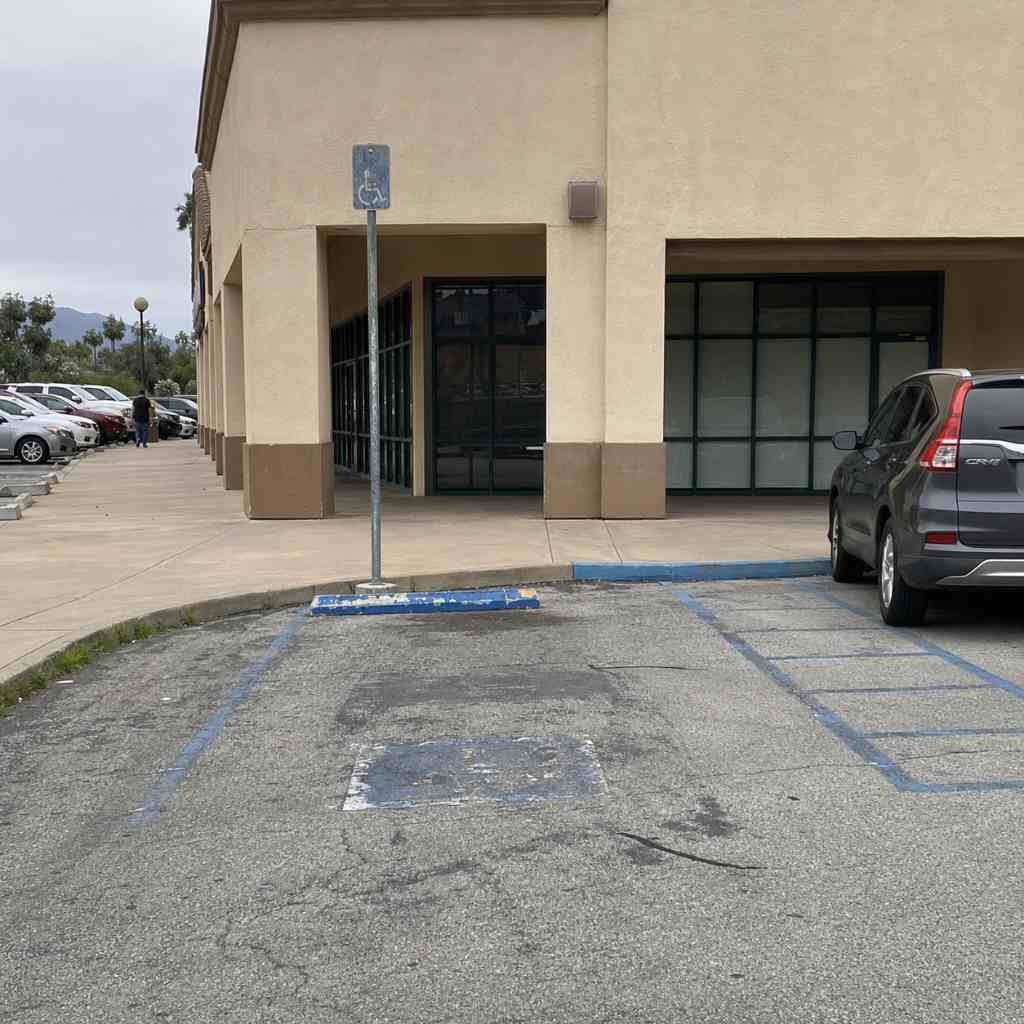
Serial ADA plaintiffs identify targets through systematic methods: drive-by surveys of commercial corridors, Google Street View pre-screening of parking lots and entrances, automated website accessibility scanning tools, and public records searches for businesses without CASp inspection history. Properties with visible, easily documented violations that support rapid filing move to the front of the queue.
The targeting workflow follows a predictable sequence. Each step narrows a large pool of commercial properties down to the small number that will actually receive a complaint. The methods fall into three categories: physical surveillance, digital scanning, and filing prioritization.
- Investigators drive commercial corridors where strip malls, restaurants, and medical offices concentrate, photographing parking areas for missing or non-compliant International Symbol of Accessibility signage and van-accessible signage from the public right-of-way.
- Google Street View pre-screening lets filers scan for specific visual indicators without visiting the property: missing vertical ISA post signs at accessible parking stalls, absent blue curb paint, portable ramps at entrances indicating non-permanent solutions, and parking lots with no visible van-accessible signage, filtering out compliant sites before any resources are spent on physical inspection.
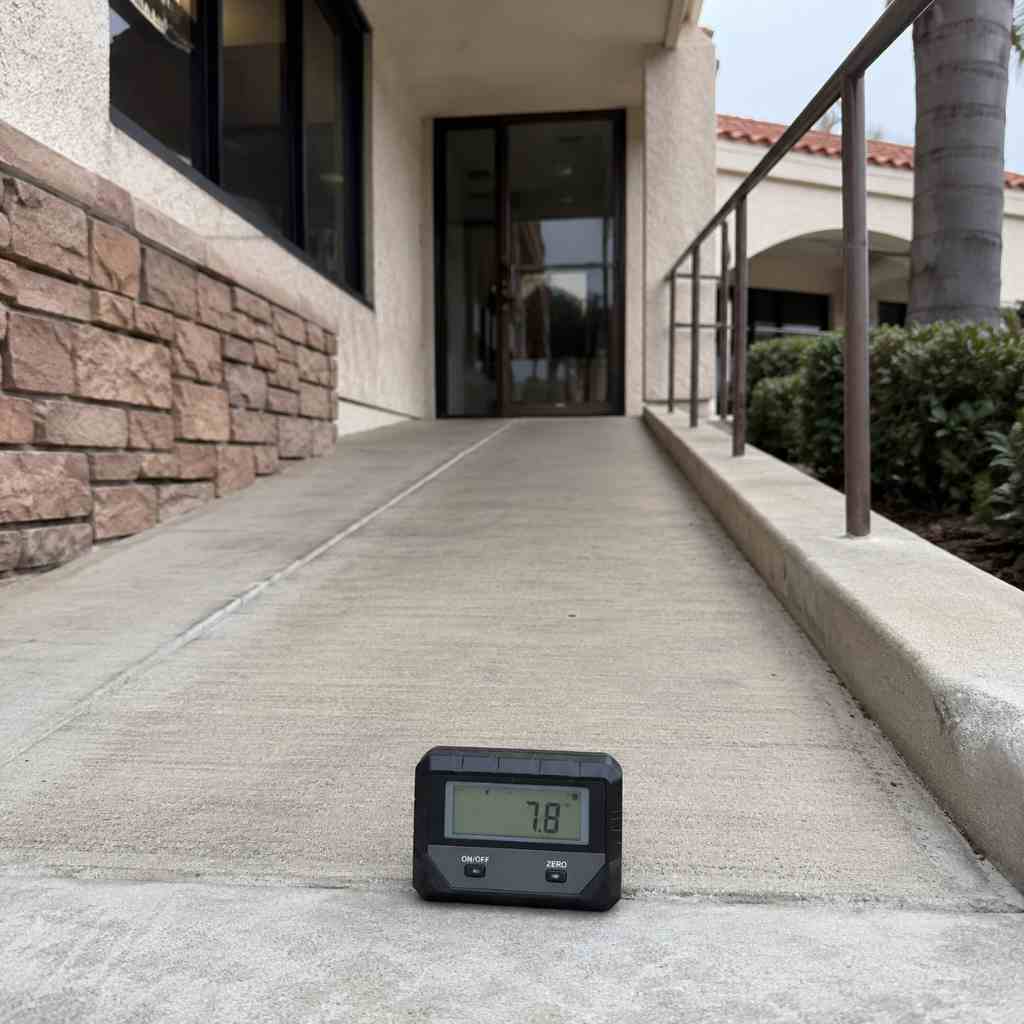
- On-site visits use digital inclinometers to measure entrance ramp slopes and cross-slopes against Chapter 11B maximums of 8.33% running slope for ramps and 2.0% cross-slope for accessible routes, documenting measurements that exceed those thresholds with timestamped photographs.
- Automated website scanning tools such as WAVE, axe, and Lighthouse crawl business websites at scale, flagging missing alt text, insufficient color contrast, keyboard navigation failures, and missing ARIA labels against Web Content Accessibility Guidelines 2.1 AA criteria.
- Scan results generate violation reports that plaintiffs attach directly to Unruh Act complaints. Each documented website barrier converts into a separate $4,000 minimum statutory damages claim under §52(a).
- Filers prioritize businesses with no CASp inspection report on file, properties showing multiple violations documentable from the public right-of-way, and businesses whose prior ADA settlement history appears in court records.
- Small businesses without retained legal counsel and commercial tenants relying on landlords for common-area compliance rank highest because both profiles correlate with faster, lower-cost settlements.
The pattern that connects every step is efficiency. Serial filers are not conducting comprehensive accessibility evaluations. They are identifying the lowest-effort, highest-return targets where violations are visible and documentation requires minimal time or cost on the filer’s end. A current CASp inspection report on file disrupts that calculation at step 6. The report signals the business holds statutory protections under Civil Code §55.56 that increase the filer’s litigation cost and timeline.
Which Businesses Are Most Vulnerable to Serial ADA Lawsuits?
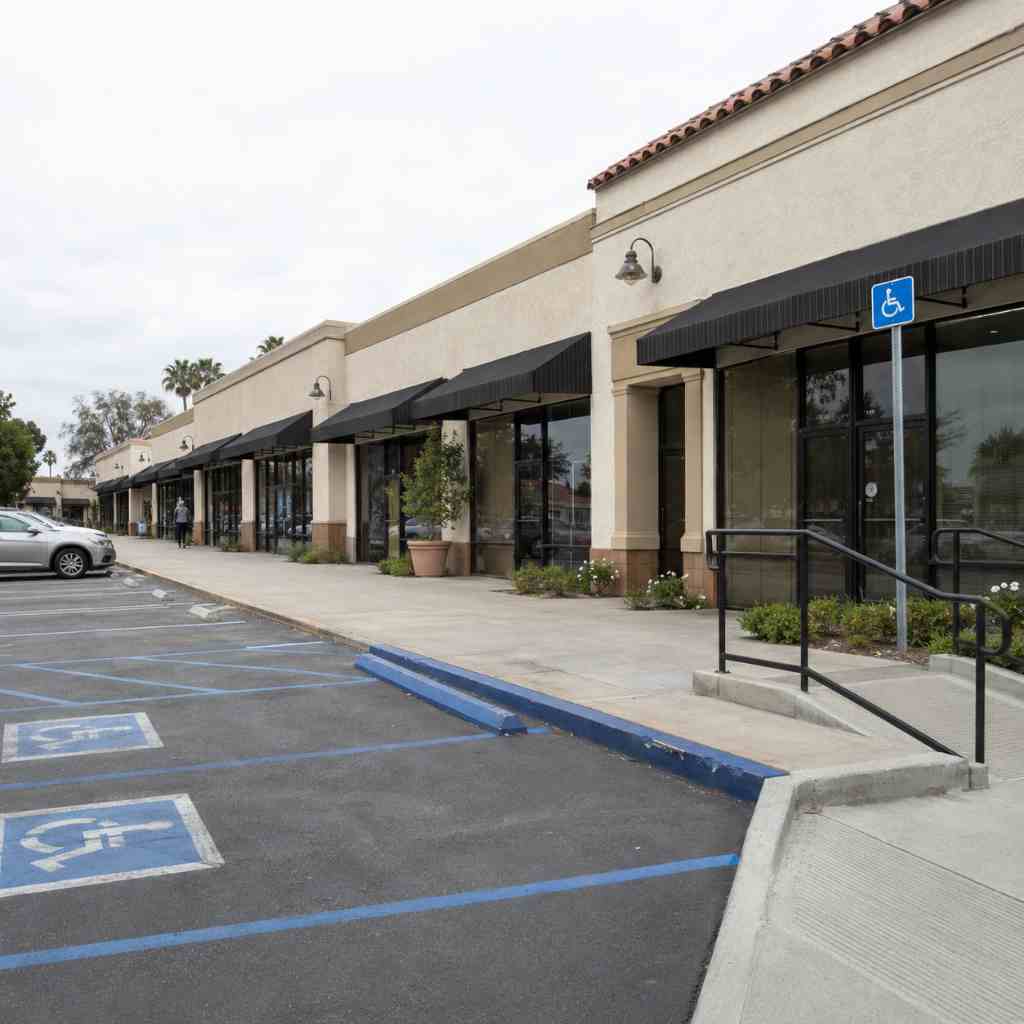
Businesses most vulnerable to serial ADA lawsuits occupy older commercial properties built or last renovated before the 2010 ADA Standards took effect, operate in high-foot-traffic retail or food service locations along commercial corridors, lack a current CASp inspection report, and have no ADA-compliant website. Small businesses without in-house legal counsel face the highest concentration of these factors.
Vulnerability splits into two categories: the property itself and its location, and how the business operates relative to compliance.
Property and location characteristics that correlate with high filing risk:
- Commercial buildings constructed or last renovated before March 2012, when the 2010 ADA Standards became enforceable, carry barrier conditions built to older specifications: door hardware requiring grasping or twisting rather than lever operation, restroom layouts built to the pre-2010 60-inch turning radius rather than current T-turn clearance specifications, and parking stalls dimensioned to older standards that fall short of current van-accessible width requirements.
- Properties on heavily trafficked commercial corridors such as Ventura Blvd, Pacific Coast Highway retail strips, and El Camino Real commercial zones concentrate the visibility and foot traffic that serial filers use to identify targets efficiently.
- Multi-tenant strip malls where shared parking lots, common-area pathways, and building entrances contain violations expose every tenant in the complex to individual claims, regardless of which tenant controls the non-compliant element.
- Medical office buildings draw serial filing attention because patient populations include individuals with mobility impairments who are both more likely to encounter barriers and more likely to have standing to bring claims.
Operational and behavioral factors that elevate filing vulnerability:
- No current CASp inspection report on file removes the business from the category of defendants who can invoke §55.56 early evaluation conference rights and shifts the litigation timeline and cost calculus in the filer’s favor.
- Tenants relying on landlords for common-area ADA compliance without an ADA compliance rider in the lease, the clause that allocates barrier removal responsibility between landlord for common areas, structural elements, and parking and tenant for interior buildout, signage, and point-of-sale counters, leave both parties exposed when a serial filer names the tenant, the landlord, or both.
- No ADA-compliant website creates a second, independent targeting surface that serial filers exploit through automated scanning tools entirely separate from any physical property visit.
- Prior ADA settlement history visible in court records functions as a public signal that the business has paid before, placing it on shortlists for repeat filings by the same plaintiff or firm.
- Businesses operating without retained legal counsel settle faster and with less resistance than represented defendants, which serial filers learn through experience and factor into their target selection.
The overlap between these two categories is where risk compounds. A strip mall restaurant on a pre-2010 property along a high-traffic corridor fits the property profile serial filers screen for, and if that same business also lacks a CASp report and has no retained counsel, it matches the operational profile as well. Renovation does not automatically resolve the exposure. A business that alters any area of its building triggers a path-of-travel upgrade requirement under California Building Code CBC 11B-202.4 when the alteration cost exceeds 20% of the total construction cost. A business that renovates its interior without budgeting for that obligation creates new violations during the same project intended to modernize the space.
What Legal Protections Exist Against Serial ADA Filers in California?
California provides four statutory mechanisms that give defendants procedural tools to slow serial ADA filings, raise the plaintiff’s litigation costs, and reduce or eliminate statutory damages. Each mechanism operates independently, but they function as a connected system when a business activates them in sequence.
The protections are not automatic. Each one requires the business to have taken a specific step before or immediately after being served. The four mechanisms and their triggers:
- Defendants holding a current CASp inspection report gain the right to request an early evaluation conference and a potential stay of proceedings under §55.56. The stay creates a court-supervised window to remediate documented barriers before the case advances to litigation on damages. The CASp report also serves as evidence of good-faith compliance effort that courts weigh when deciding whether to reduce or eliminate statutory damages.
- Plaintiffs filing construction-related accessibility claims must meet heightened procedural requirements under Civil Code §55.54: the complaint must include a mandatory advisory notice informing the defendant about CASp inspections, must specify the exact access barrier alleged, and must identify whether the plaintiff or plaintiff’s attorney personally verified the barrier. Failure to meet these requirements can result in dismissal or reduced damages. Defendants who hold a CASp report and have corrected or are correcting the alleged violations qualify for reduced attorney’s fee exposure under §55.54(d).
- A plaintiff who has filed 10 or more construction-related accessibility complaints within the preceding 12 months must disclose that filing history to the court under §55.3. The disclosure creates a documented record of volume that defendants and courts can use to evaluate the plaintiff’s litigation pattern.
- Courts can designate serial filers as vexatious litigants under CCP §391, requiring prefiling court approval for future lawsuits and posting of security. The §55.3 high-frequency litigant disclosure provides the evidentiary foundation for these motions. The California Judicial Council maintains the vexatious litigant list, and designation applies across all California courts.
The sequence matters. A business that obtains a CASp inspection report before being served gains access to all three statutory layers simultaneously: §55.56 early evaluation rights, qualified defendant status under §55.54(d) with reduced fee exposure, and documented evidence that undercuts the plaintiff’s damages claim. A business served without a CASp report can still schedule an inspection immediately and begin building the compliance record, but the §55.56 early evaluation window and the qualified defendant fee reduction carry the most weight when the report predates the complaint.
How Does a CASp Inspection Reduce Serial ADA Lawsuit Risk?
A CASp inspection reduces serial ADA lawsuit risk through two mechanisms: it identifies and prioritizes the specific access barriers serial filers target before those barriers can be documented as the basis for a claim, and it creates a documented compliance record that triggers statutory protections under §55.56.
A Certified Access Specialist evaluates every publicly accessible element of the property against both federal 2010 ADA Standards and California Building Code Chapter 11B requirements. The inspection covers the same elements serial filers document when building a case: parking lot striping, signage, and van-accessible stall dimensions; path-of-travel slope, width, and surface conditions; entrance door hardware, threshold heights, and clear floor space; restroom grab bar placement, turning radius, and fixture clearances; service counter heights and reach ranges; and site signage including tactile and visual directional indicators. The resulting report does not produce a simple pass or fail designation. It documents every identified barrier categorized by severity and organized into a remediation priority matrix that separates conditions requiring immediate correction from those classified as readily achievable barrier removal, meaning changes that can be accomplished without significant difficulty or expense.
Priority ranking determines what gets fixed first. A property owner receives a sequenced remediation roadmap that addresses the highest-risk violations first. Parking violations lead serial filing complaints at a higher rate than any other barrier category because they are documentable from the public right-of-way without entering the building, require no tools beyond a camera, and represent the first element a filer encounters on approach. Entrance ramp slopes and restroom clearances follow, but correcting parking signage, striping, and van-accessible stall markings eliminates the most common evidentiary starting point before a filer can photograph it.
The litigation advantages activate once the CASp report is completed and on file. Defendants holding a current report gain the right to request an early evaluation conference and a potential stay of proceedings under §55.56, creating the court-supervised remediation window described in the preceding section’s statutory protections. The report also establishes the business as a qualified defendant under §55.54(d). This status reduces attorney’s fee exposure if the case proceeds. Courts weigh the CASp report as evidence of good-faith compliance effort when determining whether to reduce the per-violation statutory damages below the $4,000 minimum or eliminate them entirely. California law requires businesses that have obtained a CASp inspection to post a certificate of inspection, a visible signal to serial filers during property surveys that the business holds a documented compliance record and the statutory protections that accompany it.
Our DSA-certified inspectors cover your entire property.
What Are the Real Costs of an ADA Lawsuit from a Serial Filer?
A serial ADA lawsuit typically costs a California business between $10,000 and $75,000 or more per claim in combined statutory damages, attorney’s fees, defense costs, and remediation. The total compounds quickly because each component multiplies independently: damages stack per violation per visit, plaintiff’s attorney’s fees often exceed the damages themselves, and remediation costs apply regardless of the lawsuit’s outcome.
Each cost component carries its own range and multiplication mechanism.
| Cost Component | Typical Range | What Drives the Number |
|---|---|---|
| Unruh Act statutory damages | $4,000 per violation per visit (minimum under §52(a)); 3 violations across 2 visits = $24,000 floor | Each barrier documented counts as a separate violation. Each visit multiplies the full violation count. Plaintiffs schedule multiple visits to increase the damages floor before filing. |
| Plaintiff’s attorney’s fees | $15,000 to $40,000+ per case | Prevailing-party fee shifting under the Unruh Act. The plaintiff’s counsel recovers fees on top of damages. Fees routinely exceed the statutory damages in single-property cases. |
| Defense attorney costs | $5,000 to $25,000+ per case | Most serial ADA cases settle in the $5,000 to $8,000 range because the plaintiff’s model depends on volume and speed. Costs jump sharply if the defendant files a motion challenging standing or complaint adequacy under §55.54. That single decision transforms a quick settlement into a $15,000+ contested matter. |
| Mandatory remediation | $2,000 to $50,000+ per property | Court-ordered or settlement-required barrier removal. Scope depends on violation count and barrier type. Parking lot resurfacing and restroom reconstruction drive the highest remediation costs. |
| Business disruption | Variable; often underestimated | Closed areas during remediation, staff time diverted to legal response, insurance premium increases after a filed claim. Not recoverable through any statutory mechanism. |
A single claim is rarely where the expense ends. Repeat filing exposure is what makes serial ADA litigation disproportionately expensive compared to a one-time lawsuit. A serial filer who receives a settlement and later determines that remediation was incomplete or missed additional barriers can file a new complaint based on a subsequent visit, resetting the damages clock. Each new filing generates a new $4,000-per-violation-per-visit floor, new plaintiff’s attorney’s fees, and new defense costs.
The settlement itself becomes a targeting signal visible in court records, attracting additional plaintiffs and firms who monitor filing activity for businesses that have demonstrated willingness to pay. The multiplier compounds further when a single property has violations spanning parking, entrance, restroom, and website. Each category is treated as a separate violation with separate damages. A property with four barrier categories documented across two visits faces a $32,000 statutory damages floor before any attorney’s fees or remediation costs are calculated.
What Should a Business Do After a Serial ADA Filing?
A business served with a serial ADA lawsuit should preserve evidence, verify CASp report status, retain defense counsel, and make no response to any demand until counsel completes a full case assessment.
The response window is narrow. A California state court complaint requires an answer within 30 days of service, and a federal ADA complaint requires a response within 21 days.
- Document current property conditions with timestamped photographs of every access element cited in the complaint: parking signage, entrance ramp slopes, door hardware, restroom clearances, counter heights, and path-of-travel surfaces. Photograph conditions as they exist on the day of service, not after any corrections. If the business corrects a barrier before documenting the original condition, the plaintiff’s photographs become the sole record and the defendant loses the ability to challenge the severity characterization.
- Check whether the business holds a current CASp inspection report. If a report exists, notify counsel immediately to invoke §55.56 early evaluation conference rights and request a stay of proceedings before the case advances.
- If no CASp report exists, schedule an inspection as soon as possible to begin building the documented compliance record that can reduce statutory damages and establish qualified defendant status under §55.54(d).
- Retain ADA defense counsel before the response deadline. Counsel experienced in California serial ADA cases will know whether to answer, move to dismiss for §55.54 procedural deficiencies, or negotiate pre-answer.
- Verify whether the plaintiff meets the high-frequency litigant threshold under §55.3 by requesting their 12-month filing history. If the plaintiff has filed 10 or more construction-related accessibility complaints, that disclosure record may support a vexatious litigant motion under CCP §391.
- Do not respond to any demand letter or settlement offer before counsel has reviewed the complaint, assessed CASp report status, evaluated the plaintiff’s filing history, and determined whether the complaint meets §55.54 procedural requirements. Early settlement without this review forfeits statutory advantages and creates a court-record signal that attracts future filings.
The sequence exists for a reason. Evidence degrades after service. Photographs taken weeks later carry less weight than photographs taken the day the complaint arrives. Retaining counsel before the deadline protects the response window, but retaining counsel before responding to the demand letter is where most businesses make the critical error. A demand letter from a serial filer’s firm is calculated to produce a fast, low-cost settlement before the defendant has time to discover the statutory protections available under §55.56 and §55.54. Responding before counsel has assessed CASp report status and plaintiff filing history means settling without knowing whether the business holds advantages that would reduce the cost substantially.

Written by Emily Johnson
Emily Johnson is a Certified Access Specialist (CASp) Inspector and is passionate about making spaces accessible for all. With over 10 years of experience and degrees in Civil Engineering and Architecture, she inspires others while championing ADA awareness.
RECENT POSTS
CATEGORIES
Get a free quote today!
By clicking “Submit”, you are signing up to receiving emails from us. You can unsubscribe whenever you like. SMS rates may apply.
Want To Know More About ADA Accessibility And How To Get Compliant?
Check out our blog!