California ADA Shower & Bathing Requirements for Commercial Buildings
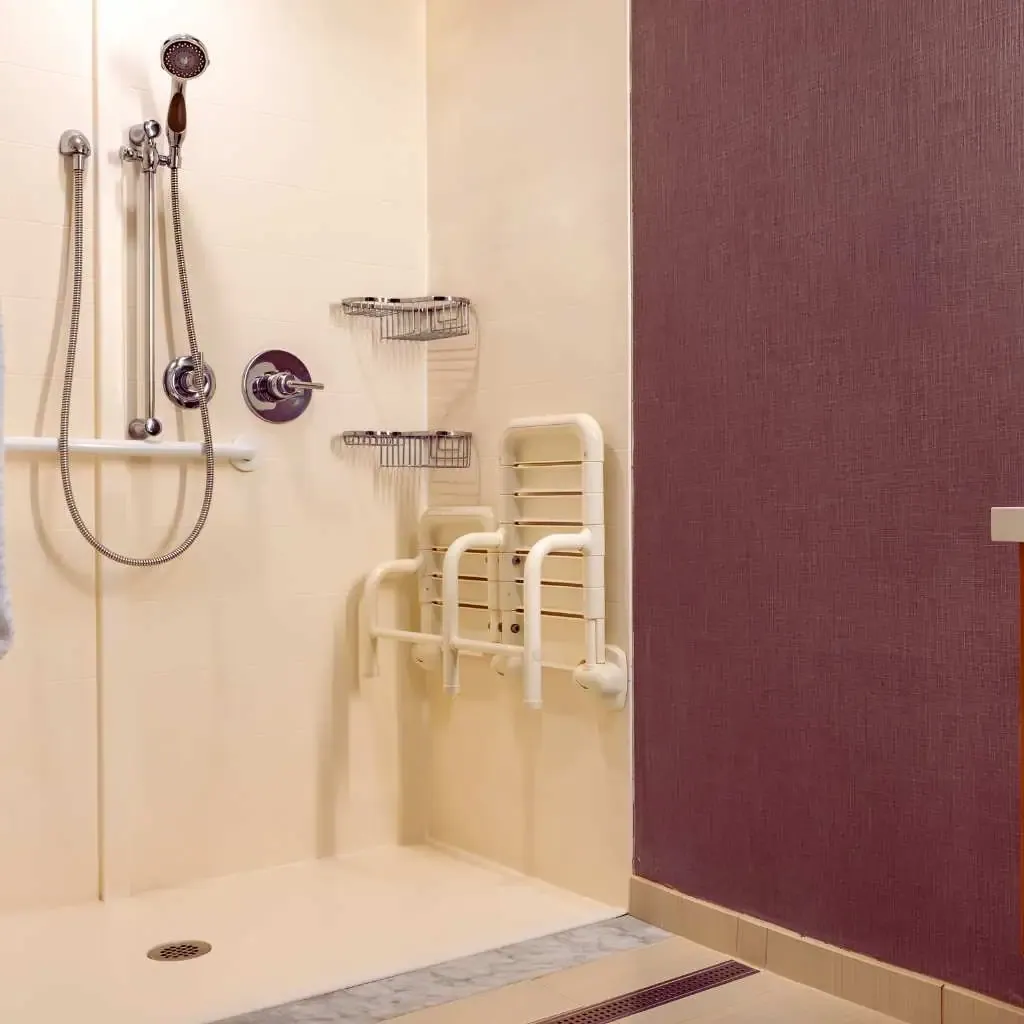
California ADA shower requirements mean complying with both federal ADA standards and California Title 24 accessibility rules for any shower or bathing facility in a commercial building. In practice, this affects hotels, gyms, apartment common areas, shelters, healthcare facilities, and any site where showers are provided to the public or occupants. You are not designing to a single rulebook. California requires dual compliance, and when the state code is stricter, Title 24 controls.
Here’s what that means. You must choose the correct shower type (roll-in or transfer), size the space to exact dimensions, and install grab bars, seats, and controls within very specific reach ranges. CASp inspectors focus heavily on these details because shower areas are one of the most common failure points in final inspections. In real projects, small mistakes like a seat installed two inches too high or controls placed just out of reach can trigger failed finals, delayed openings, or expensive tear-outs after construction. Why this matters is simple: getting shower dimensions right upfront protects your schedule, your budget, and your legal exposure.
What ADA Shower Requirements Mean in California
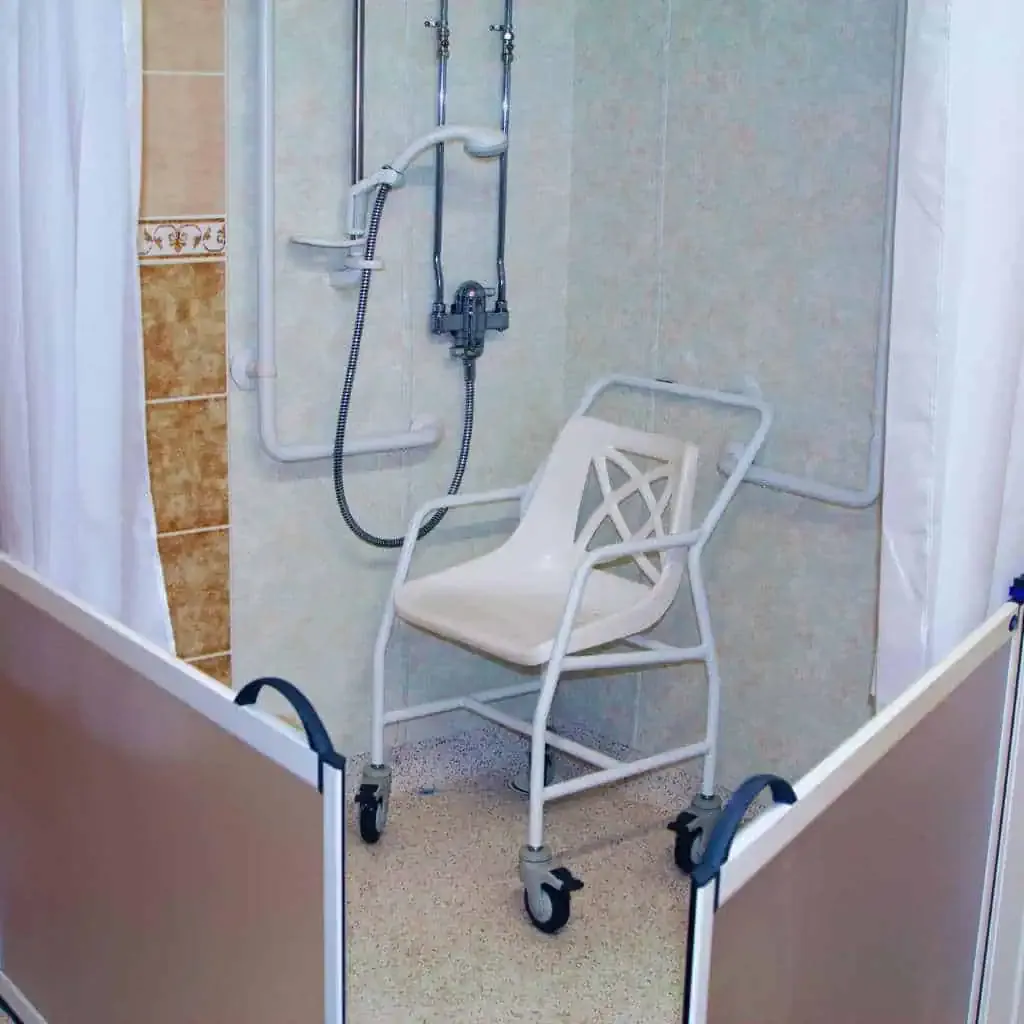
Roll-In vs Transfer Showers
What Codes Control Accessible Showers in California?
Yes, both the ADA and California Title 24 apply. The 2010 ADA Standards for Accessible Design set the federal baseline, but California’s CBC Title 24 (Part 2, Section 11B) adds its own, more stringent layer.
Here’s how that affects your specs:
California is stricter about things like clear floor space, grab bar placement, and shower seat dimensions.
You can’t simply value engineer to the ADA minimums and expect to pass in California. Title 24 is the controlling code here.
Where does CASp fit into this?
A CASp (Certified Access Specialist) helps owners and designers navigate the overlap. They:
Document compliance before construction to help avoid lawsuits
Identify risk areas early, especially when field conditions might reduce clearances
Verify the built condition to ensure your project won’t fail inspection later
So if you’re planning a new accessible shower or retrofitting one, don’t just rely on federal checklists. California enforces its own design rules and a CASp inspection is your best bet for getting it right.
Which Commercial Properties Usually Need Accessible Showers?
Yes, many types of properties are required to provide accessible showers, including:
Hotels and motels
Gyms, spas, and health clubs
Dormitories or university housing
Apartment complexes with shared amenity spaces
Homeless shelters or transitional housing
Workplaces with employee shower facilities
Important clarification:
You don’t have to be a hotel or hospital to trigger ADA/CBC shower requirements. If showers are offered to tenants, the public, or employees, you may be required to include at least one that’s fully accessible even if you think your facility is exempt.
Don’t rely on assumptions. This is one of the most misunderstood areas of accessibility law in California.
Why Shower Specs Fail Inspections More Than Owners Expect
Here’s why shower designs so often fail inspection:
They involve tight clearances, overlapping reach ranges, and multiple safety factors like slip prevention and scald protection all in one small space.
Even when plans look compliant, you run into real-world build issues:
Tile buildup reduces the finished clearance
Glass doors or curtains restrict maneuvering space
Benches and soap shelves are installed slightly off-spec
Grab bars are measured from finished tile, not substrate throwing off spacing
These small mistakes add up. The design might be technically compliant, but field conditions shrink your margins. That’s why it’s critical to account for materials, fixtures, and installation tolerances early and verify with a CASp before you pour concrete or tile walls.
Roll-In vs Transfer Showers
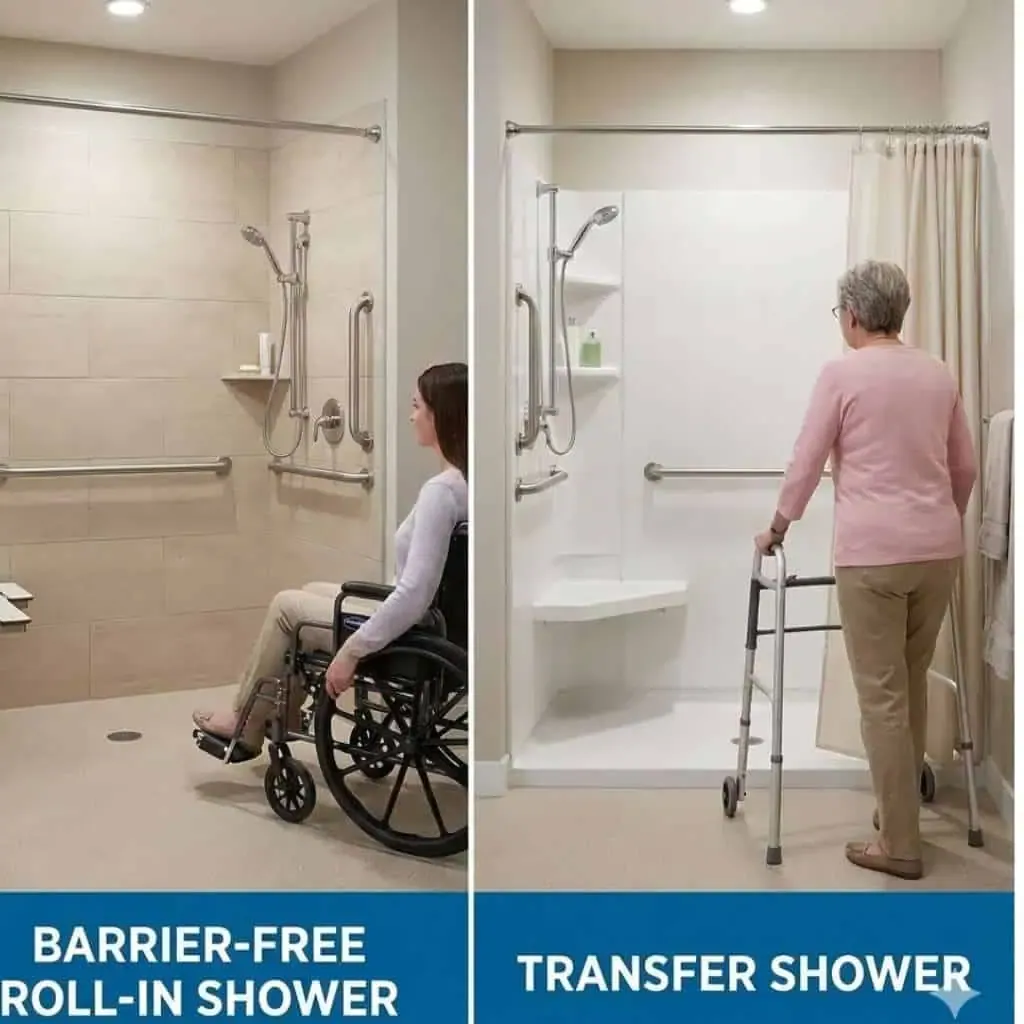
What’s the Difference Between a Roll-In Shower and a Transfer Shower?
Yes, the type matters. In ADA compliance, roll-in” and transfer showers aren’t interchangeable each has distinct dimensional rules, seat placement, and grab bar configurations.
A roll-in shower is designed for users who remain in their wheelchairs and roll directly into the shower space. It must allow enough space for turning or lateral movement and typically doesn’t include a built-in seat unless specified. By contrast, a transfer shower serves users who can move from a wheelchair onto a mounted seat. This type has tighter spacing, a mandatory seat, and very specific grab bar placements.
Here’s how to decide which type you’re dealing with:
User mobility: If the user needs to enter the shower in a wheelchair, it’s a roll-in.
Entry method: If the user transfers onto a seat, it’s a transfer shower.
Inspection angle: CASp inspectors verify not just labels but layout, dimensions, and fixture placement.
Bottom line: calling it the wrong thing during planning or construction can lead to failed inspections or retrofits.
When Is a Roll-In Shower Required vs Allowed?
It depends and this is where most compliance guides get it wrong.
Under the 2010 ADA Standards and California Title 24, the required shower type is determined by:
Facility type: Hotel, dorm, gym, hospital, apartment complex, etc.
Occupancy class: Whether it’s transient lodging or permanent residential.
Number of bathing fixtures: Proportional accessibility scoping comes into play.
Scoping tables: These outline how many of each type must be installed based on room count or units.
For example: In a new hotel with 50 guest rooms, at least one ADA-compliant roll-in shower is typically required and the rest must be transfer type if showers are offered. But in a fitness facility, scoping might allow either type depending on layout and fixture count.
Inspectors will reference Sections 213.3.6 (ADA) and 11B-213 (Title 24) to verify if the type you’ve used actually meets the scoping rules. That’s why many owners request ADA compliance inspections in California early so the scoping logic is verified before construction starts.
How Many Showers Must Be ADA-Compliant
No, not every shower needs to be accessible but the number isn’t random.
ADA and California Title 24 use scoping rules to determine how many accessible showers must be installed based on occupancy type, number of facilities, and how the space is used. These rules are separate from the technical dimensions of the shower itself.
Here’s the basic breakdown:
Transient lodging (like hotels/motels): A percentage of guest rooms must include accessible showers, depending on total room count.
Multifamily housing: Requirements vary based on whether the project falls under federal Fair Housing, ADA, or CBC accessibility mandates.
Gyms, schools, and workplace locker rooms: At least one roll-in or transfer shower must be provided per facility, and more may be required if multiple shower compartments are offered.
Dorms and shared housing: Often scoped similarly to transient lodging unless a permanent residence exemption applies.
Key scoping rule in Title 24: If a facility offers only one shower compartment, that shower must meet accessibility standards.
But if multiple showers are provided (like in a gym or locker room), at least one must be accessible, and additional units may be required depending on total count and layout.
Why this matters:
Many owners mistakenly focus only on whether a single shower is built to spec but if the wrong one is made accessible, the project can still fail.
Real World Owner Question: Can I Pick the Cheaper Shower Type?
No, not if you want to avoid a future correction notice.
While it’s tempting to install the smaller, cheaper option (usually a transfer shower), that’s only legal if the scoping rules allow it. Installing a transfer shower when a roll-in is required or failing to include a seat when one is mandated is one of the most common triggers for ADA violations flagged in post-construction audits.
What this really means for your project:
Cheaper upfront doesn’t mean cheaper long-term.
CASp inspectors don’t just check if a shower is present they check if the correct one is installed, in the correct location, with the correct specs.
Fixing it later often involves demolition, retiling, and re permitting.
Before finalizing plans, double check scoping against your occupancy type and fixture count. If you’re unsure, get a CASp inspection during the design phase not after the walls go up.
How Many Accessible Showers Are Required in California?
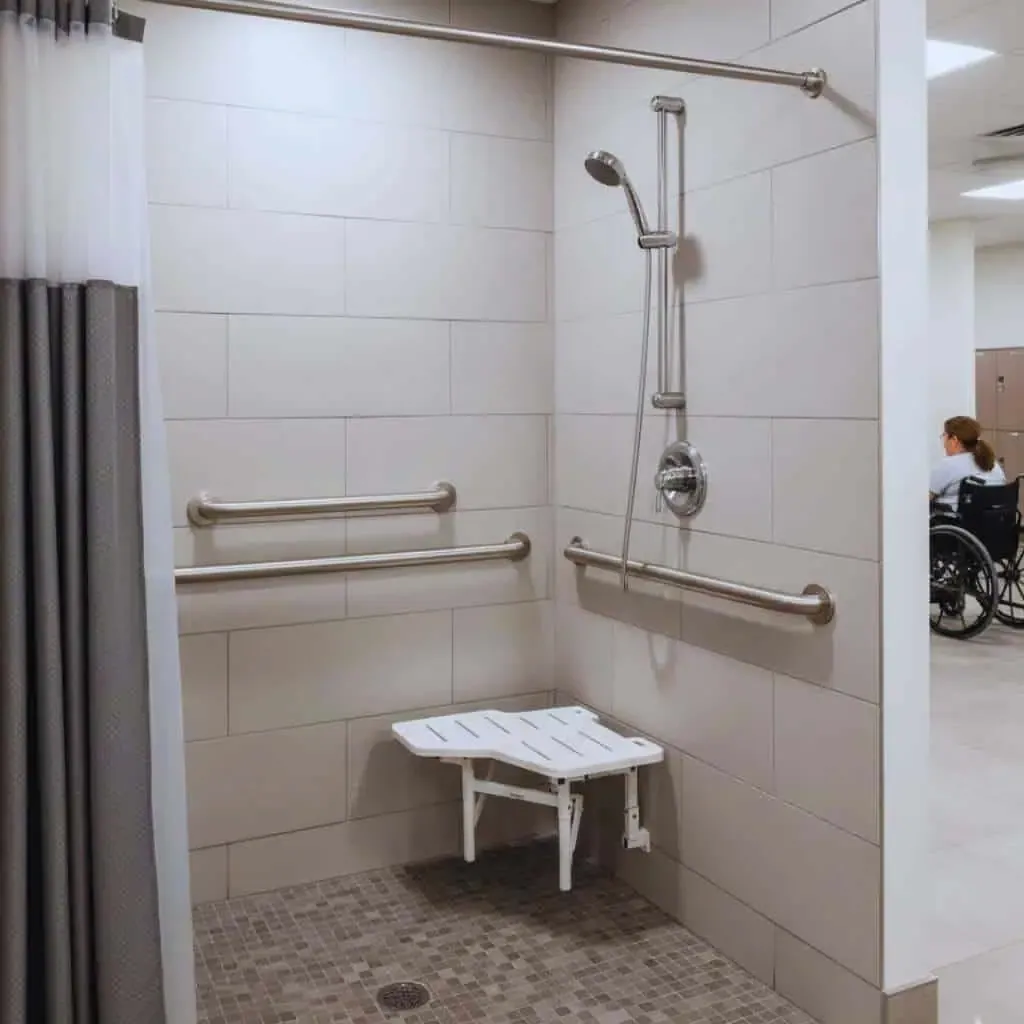
California code does require accessible showers, but not in every facility or unit. Whether one is needed depends on the building type, number of units, and occupancy classification.
Here’s how it breaks down:
Commercial Buildings: If a facility provides employee or public showers (e.g., gyms, health clubs, dorms), at least one shower must be accessible per ADA and California Building Code (CBC).
Multi-Unit Housing: New residential developments with multiple units (e.g., apartments, senior living) often require a percentage of units to have accessible features, including roll-in or transfer showers, depending on funding and occupancy.
Hotels & Motels: Under Title III of the ADA and Chapter 11B of the CBC, specific room counts trigger accessible shower requirements. For example, a hotel with 76–100 rooms typically needs at least four accessible rooms with roll-in showers.
If you’re unsure whether your project triggers these requirements, a scoping analysis from a CASp inspector can clarify your obligations before construction begins.
Existing Buildings, Remodel Triggers, and When Shower Upgrades Are Required
No—ADA and California codes don’t always require retrofitting old showers. But if you remodel, that can trigger compliance obligations.
This is where path of travel upgrades come in. Under CBC 11B-202.4 and ADA 35.151(b), when you alter a primary function area (like a locker room), you’re required to upgrade the accessible route to that area including showers even if they weren’t part of the original plan.
A few real world triggers:
Replacing a shower stall or wall tile
Converting a tub to a shower
Upgrading plumbing or drainage
Moving walls or reconfiguring space
Cost thresholds apply: If the overall project cost is over the valuation threshold (e.g., $195,358 for 2024), access upgrades become mandatory unless they’re deemed “disproportionate” (over 20% of project cost).
This is one of the most common compliance mistakes we see: owners think minor remodels don’t matter until they trigger a full inspection failure.
Why Small Measurement Errors Cause CASp Failures
Yes—even a one-inch mistake can get flagged in a CASp inspection. And it’s not because inspectors are being picky. It’s because field conditions rarely match what’s drawn.
Common culprits:
Slope and tile buildup: Shower floors must slope to drain, but over-sloping can shrink the clear floor area below minimum.
Backer board + tile thickness: Adding a ½” board and ¼” tile can offset grab bars or seats beyond the allowable reach range.
Mounting height errors: Controls or accessories installed just an inch too high or low can make the shower non-compliant.
And once installed, these are expensive to fix. That’s why it’s essential to verify clearances and reach ranges after finish materials not just at framing.
Pro tip: Always test layouts with physical templates and a laser level before installing final finishes.
When Accessories Conflict With Required Reach Ranges
Accessories like dispensers, shelves, and hooks can create code violations, even if the main shower elements are compliant.
Here’s how:
Grab bar conflicts: Soap dishes, bottles, or dispensers placed within the grab bar envelope can interfere with grip clearance, violating CBC 11B-609.3.
Shower seat obstructions: Fold-down seats must have clear space around them. Mounting a shelf behind or beside the seat can block transfers or violate clear floor area.
Control overlaps: Plumbing valves must fall within a defined reach range. Adding a towel hook too close can compromise access.
Even experienced contractors miss these details especially if accessories are added after inspection. But they’re among the most common causes of failed final sign-offs.
Best practice: Lay out accessories only after confirming compliant reach envelopes are protected. And if in doubt, consult a CASp before mounting.
California ADA Roll-In Shower Dimensions and Clearances
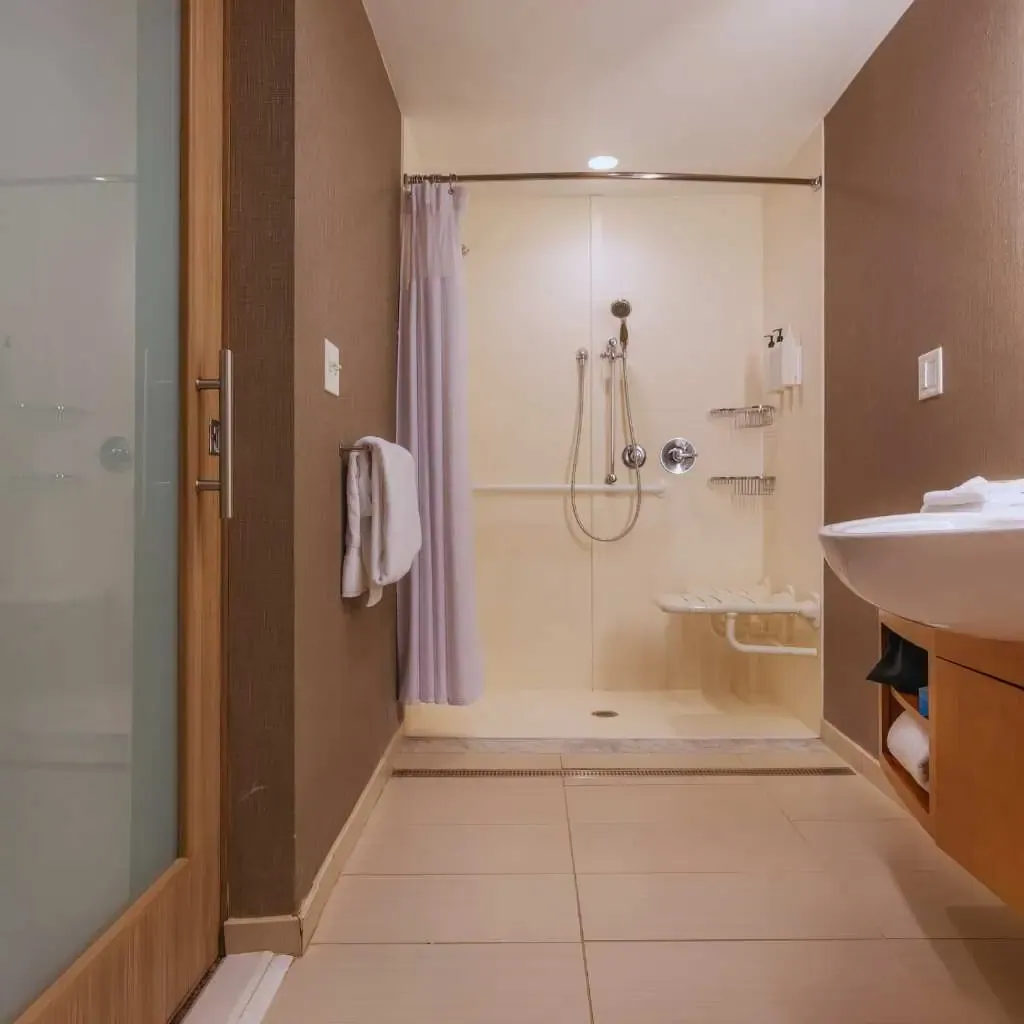
What Are the Minimum Roll-In Shower Dimensions?
Yes, there are strict size rules. Under the California Building Code and 2010 ADA Standards, most roll-in showers must meet at least 30 inches deep by 60 inches wide measured from finished surface to finished surface. This is known as the Standard Roll-In Shower layout.
But here’s the catch: dimensions must be clear and usable. That means you can’t include space obstructed by:
Grab bars that protrude too far
Towel racks
Soap dishes
Or the inward swing of a door
Anything permanently mounted that eats into the required footprint disqualifies that space from being counted.
What Threshold or Curb Height Is Allowed?
No, a traditional shower curb isn’t allowed. The ADA and CBC require a maximum ½-inch threshold at the shower entrance and it must be beveled if taller than ¼ inch.
Why this fails so often: in the field, tile setters or waterproofing installers sometimes add build-up layers (mud beds, membranes, tile) that push the curb height over the limit. Even a ¾-inch rise can trigger a violation.
A compliant roll-in shower must allow smooth, unassisted entry no bump, no lip, no barrier. Always verify the total height after tile finish.
What Clear Floor Space Is Required at the Shower Entry?
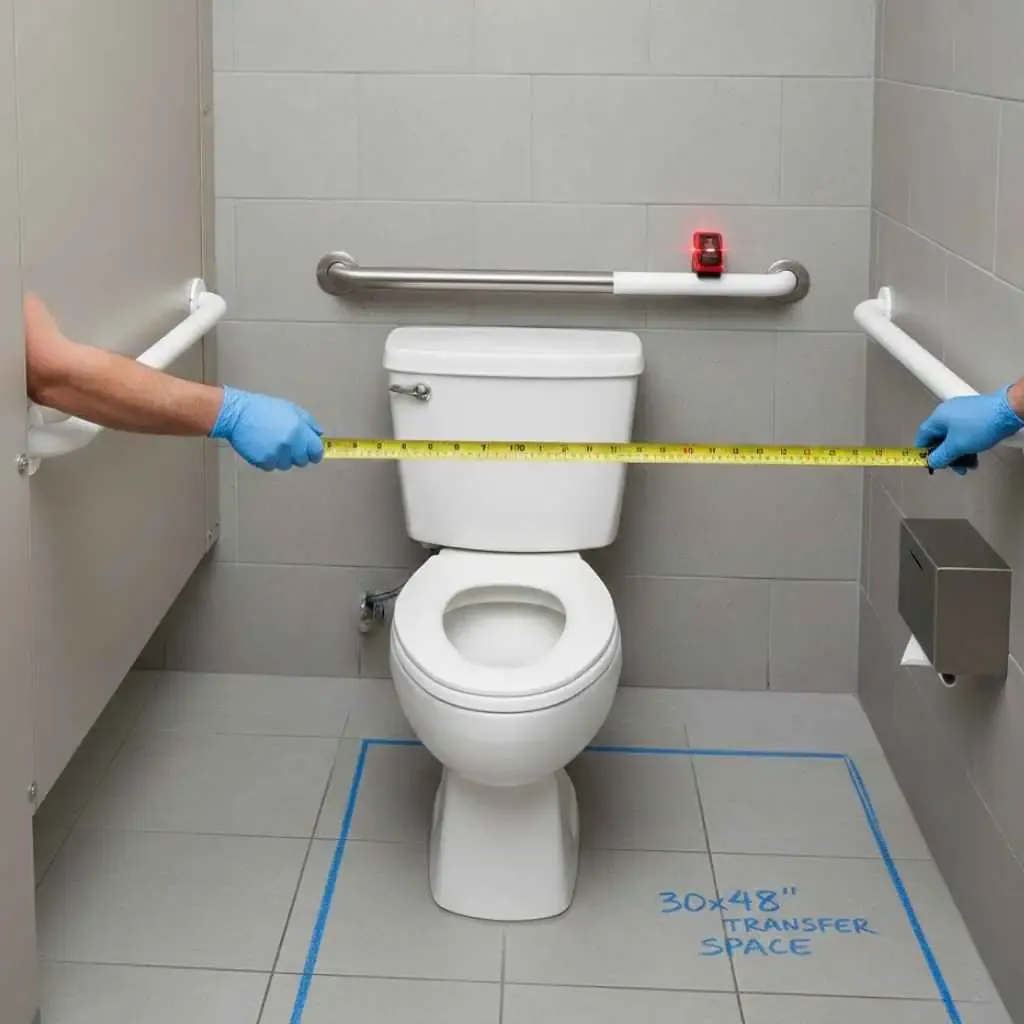
Yes, you need a 30×48 inch clear floor space directly outside the shower entry for wheelchair users to approach and transfer safely.
Here’s where owners often get tripped up:
Built-in benches reduce the usable approach area
Toilet partitions or towel warmers block the entry zone
Doors that swing into the approach path violate the clearance
That 30×48 area must be level, open, and measured free of any obstructions especially in tight layouts where lavatory fixture spacing and sink clearance come into play.”. It’s not optional it’s part of the access strategy that inspectors check first.
Frequent Roll-In Shower Fail Points in CASp Reviews
Roll-in showers are among the most frequently cited violations in CASp reports. These are the common problem areas:
Door conflicts: Doors swing into required clearances or block the shower entry
Entry clearance blocked: Wall-mounted items, vanities, or built-ins invade the approach space
Threshold too high: Raised tile curbs exceed the ½-inch max or lack bevels
Controls out of reach: Shower valves or diverters placed beyond the 48″ reach range
Handheld unit installed wrong: Not on an adjustable vertical bar or fixed too high
Even when the shower looks accessible, one misstep in layout or finish details can trigger a violation and require expensive demolition.
California ADA Transfer Shower Dimensions and Layout
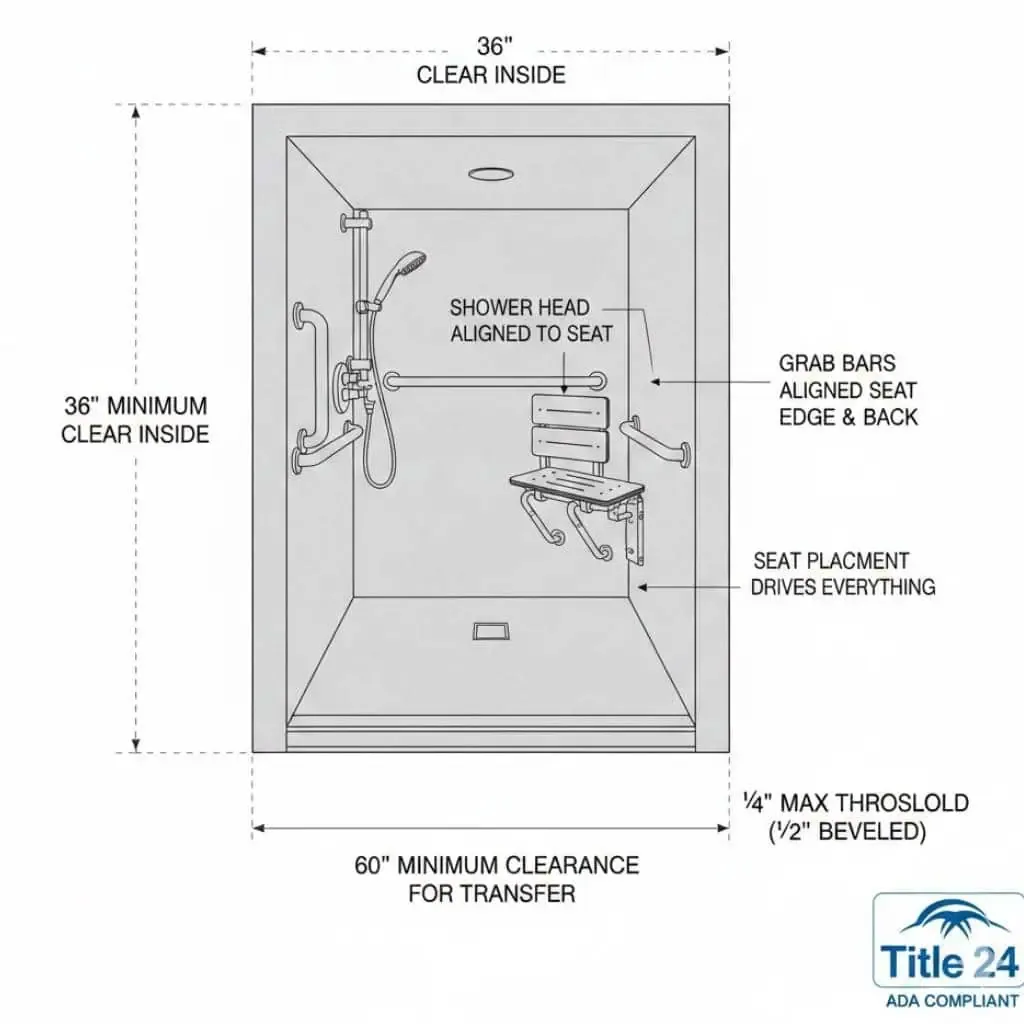
Transfer showers are the second major shower type recognized under the California Building Code (CBC Chapter 11B, based on ADA Title II/III). Unlike roll-in showers, they’re designed for users who transfer from a mobility device onto a seat so every inch of layout matters. Misjudge one control or grab bar, and you’re redoing the install.
What Are the Minimum Transfer Shower Dimensions?
Yes, transfer showers have their own fixed dimensions under ADA and California Title 24:
36 inches by 36 inches clear inside dimensions (minimum)
Clear entrance opening of at least 36 inches
60-inch minimum clearance in front of the shower entrance to allow transfer
¼-inch maximum threshold if not recessed; ½ inch allowed only if beveled
Why seat placement drives everything:
The seat is not an afterthought it’s the anchor for everything else. Once it’s mounted, all other components (grab bars, controls, shower head) must align to its edge, back, and seat height. You can’t shift the seat later if something’s off because your layout’s compliance hinges on its fixed position. Improper seat-first planning is one of the top causes of failed inspections and field rework.
Where Must the Seat Go, and What Kind of Seat Works?
Yes, the seat is a mandatory feature in transfer showers and it must meet strict specifications:
Must be mounted on the back wall (opposite the entry)
18 inches above the finished floor
Minimum 15-inch and maximum 16-inch depth
Must fold up when not in use (per CBC 11B-608.3)
Seat must support at least 250 pounds of vertical force
Real-world compliance mistake:
A common error is installing a luxury spa-style bench thinking it will pass it won’t. These are often fixed-height, too deep, non-folding, and lack structural backing for 250 lbs. That’s a code violation, not just a bad design choice.
Common Transfer Shower Mistakes That Trigger Rework
Even small misplacements can force demo or loss of certification. Watch for these:
Grab bars on the wrong wall
(Only the back wall and control wall are allowed—side walls are not compliant.)Controls placed outside the seated reach range
Must be between 38–48 inches above the floor and within 27–48 inches horizontally from the seat edge.Seat installed too high or too low
Exceeding the 18-inch ±½ inch limit voids compliance.Soap dishes or dispensers in the transfer path
These create hazards or obstructions, violating CBC 11B-608.9.
Grab Bars, Controls, and Handheld Shower Spray Units
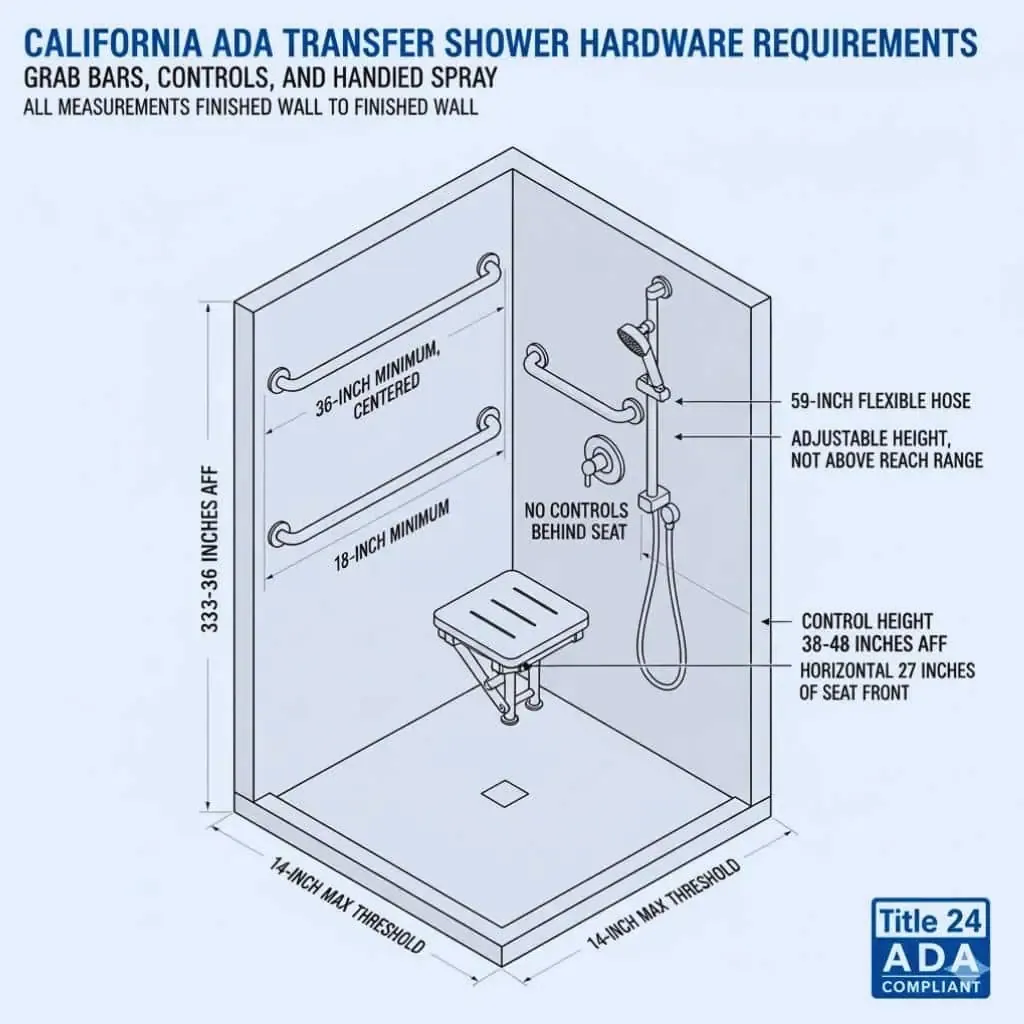
This is where most accessible showers fail not because the seat or size is wrong, but because hardware placement doesn’t meet spec. Inspectors see it constantly: grab bars one inch off, controls mounted where they’re easy to reach or handheld units anchored above reach range. These aren’t small misses they’re inspection failures.
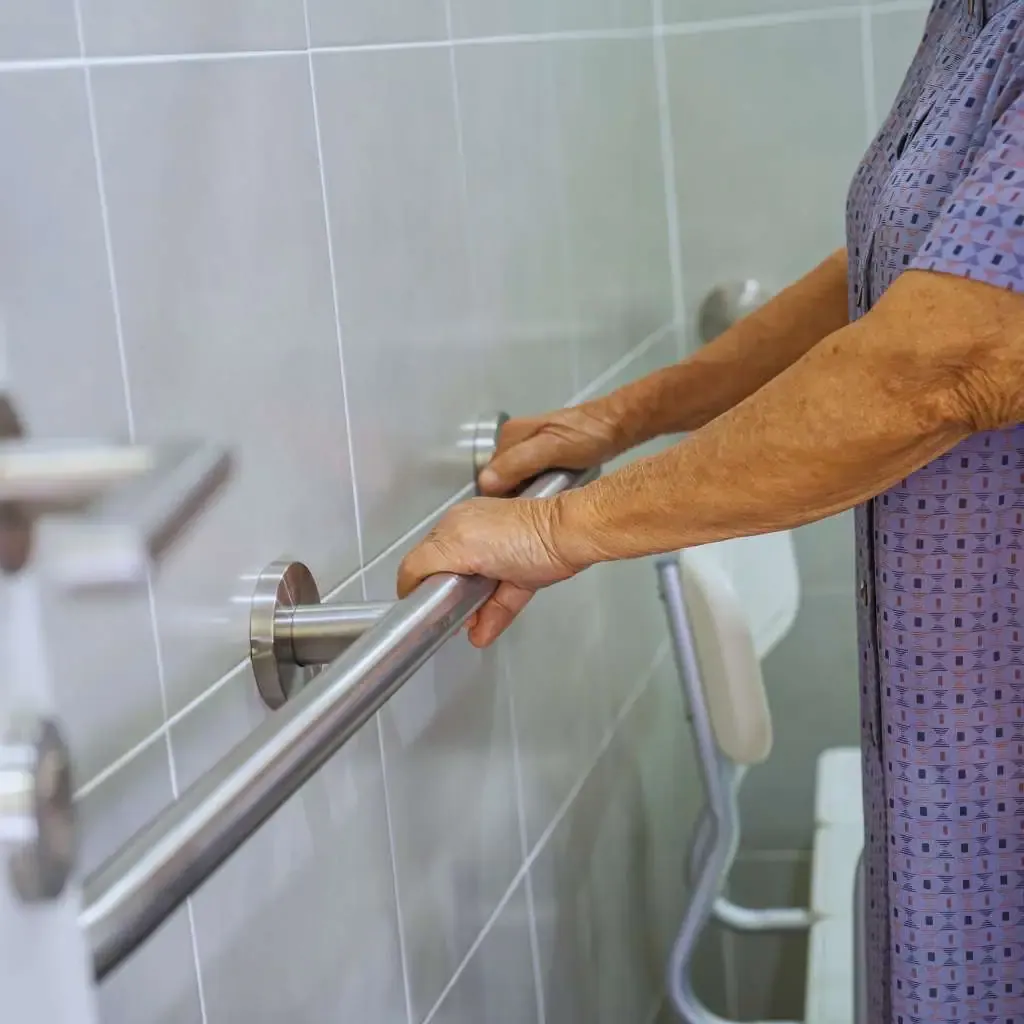
What Grab Bar Placement Do Accessible Showers Require?
ADA and California Title 24 specify exact placement rules and being close isn’t enough.
For transfer showers:
Two grab bars required: one horizontal on the back wall, and one on the control wall (adjacent wall with controls)
Back wall bar must be minimum 36 inches long, centered horizontally
Control wall bar must be minimum 18 inches long, placed at the front edge of the seat
For roll-in showers:
Two or three bars required, depending on type (Standard, Alternate, or Alternate Roll-in)
Bars must be continuous where specified, and mounted 33–36 inches above the finished floor
No bar may obstruct control access or interfere with required clearances
Measuring tip:
Measure finished wall to finished wall not to tile centerline or from framing. A single misread on a tile width can push your installation out of compliance.
Where Must Controls and the Handheld Spray Be Located?
Yes, control placement is governed by reach range not installer preference.
Must be located on the control wall, not behind or opposite the seat
Reachable from the seat position without needing to stand
Height must fall between 38–48 inches above the floor
Horizontal location must fall within 27 inches of the seat front edge
Spray unit must:
Be on a flexible hose at least 59 inches long
Have a sliding vertical mount that allows height adjustment
Not be mounted above the allowable reach range (common error)
Real inspection issue:
If your plumber says this is easier that’s not a defense. ADA/CBC compliance isn’t about convenience it’s about predictability, safety, and usability for the intended user. Mounting controls too far away, or above seated height, leads to automatic failures.
Do Thermostatic/Mixing Valves Matter for ADA Compliance?
Yes—they’re a key piece of usability and safety. While not explicitly required by ADA, thermostatic mixing valves help meet scald protection goals by maintaining a stable output temperature.
Temperature limiters help protect users with reduced sensation or reaction time
California plumbing code (CPC) often intersects here if shower controls allow extreme heat, that’s a risk even if placement is perfect
CASp inspectors will flag units that lack temperature control or anti-scald features, especially in public or commercial settings
Bottom line: Accessibility is about function, not just dimensions. Hardware location, type, and performance all feed into ADA compliance and bad choices here are costly to fix after tile goes in.
Floors, Drains, Doors, Curtains, and Slip Risk

What Kind of Flooring Do Accessible Showers Require?
ADA-compliant showers need slip resistant surfaces, even if it’s not explicitly spelled out in one regulation. That’s because usability and safety are inseparable in inspection logic.
Under CBC Title 24 Section 11B-608.10, flooring must be firm, stable, and slip-resistant, especially when wet. If tile becomes slick under water or soap, that’s a usability failure whether or not the tile is stamped ADA approved. Inspectors often don’t wait for someone to slip. They look at material type, gloss level, and real-world traction.
Here’s the reality: polished stone, glass tile, and high-gloss ceramic might pass plan review, but they often raise red flags in a field CASp inspection. If a wheelchair or walker slides too easily, or there’s visible pooling, it’s marked as non-compliant.
Slip resistance isn’t just about risk management. It’s tied to functional accessibility where mobility, water, and flooring interact in unpredictable ways.
How Do Drains and Slope Affect Shower Compliance?
Slope problems are one of the top causes of failed ADA showers. Why? Because poor drainage directly impacts maneuverability and safety.
The ADA Standards and CBC don’t just say include a drain they expect a usable surface with no puddling, ponding, or resistance. For roll-in showers, slope must be enough to direct water to the drain without creating a grade transition that impedes wheel entry or compromises turning space.
Real-world fail example: a trench drain installed at the rear wall of the shower but the slope wasn’t adjusted. Water collects at the entry. Now the “accessible” shower is unusable.
Even with center drains, excessive slope toward the middle can tilt walkers, trap wheels, and raise safety risks for seated users. Slope should work with not against the user’s path of movement.
Can You Use Doors Instead of Curtains in Accessible Showers?
Yes, but only if the door doesn’t block required clearances or entry width. This is one of the most misunderstood issues in accessible shower design.
Both the ADA and CBC allow for curtains or doors, but there’s a catch: the door swing or frame can’t interfere with required floor clearance, approach space, or transfer area.
That means:
No inward-swinging doors in transfer showers
No fixed glass panels that block a 30×60 clear approach in roll-in units
No sliding doors with tracks that reduce opening height or width
Common inspection fail: a glass door installed after the fact that reduces the clear opening by 2–3 inches. The drawings passed. The final install? Not compliant.
Curtains are often preferred because they adapt to the user and don’t obstruct maneuvering. Doors can work but they demand careful layout, hardware clearance, and real-world verification.
Title 24 Details Owners Miss
Where Title 24 Gets Stricter Than Federal ADA for Showers
Yes, California’s Title 24 is more demanding than the federal ADA Standards in key areas and most owners don’t realize it until inspection.
While the ADA sets a national baseline, Title 24, Part 2, Chapter 11B often tightens the rules. For example:
Shower compartment sizes under Title 24 require very specific minimums that must be measured clear of finish materials and trim.
Control locations in showers (like the mixing valve and handheld spray unit) must stay within a narrower reach range, especially when measured from the seat.
Adjacent fixture layout matters more in California. If the shower shares space with a toilet or lavatory, Title 24 controls the positioning of those too especially if the transfer path crosses through them.
This stricter interpretation shows up most often in public accommodations like schools, hotels, and government buildings but even multifamily units in new construction must meet the elevated standard if accessibility is scoped in.
Why Close Enough Measurements Still Fail in California
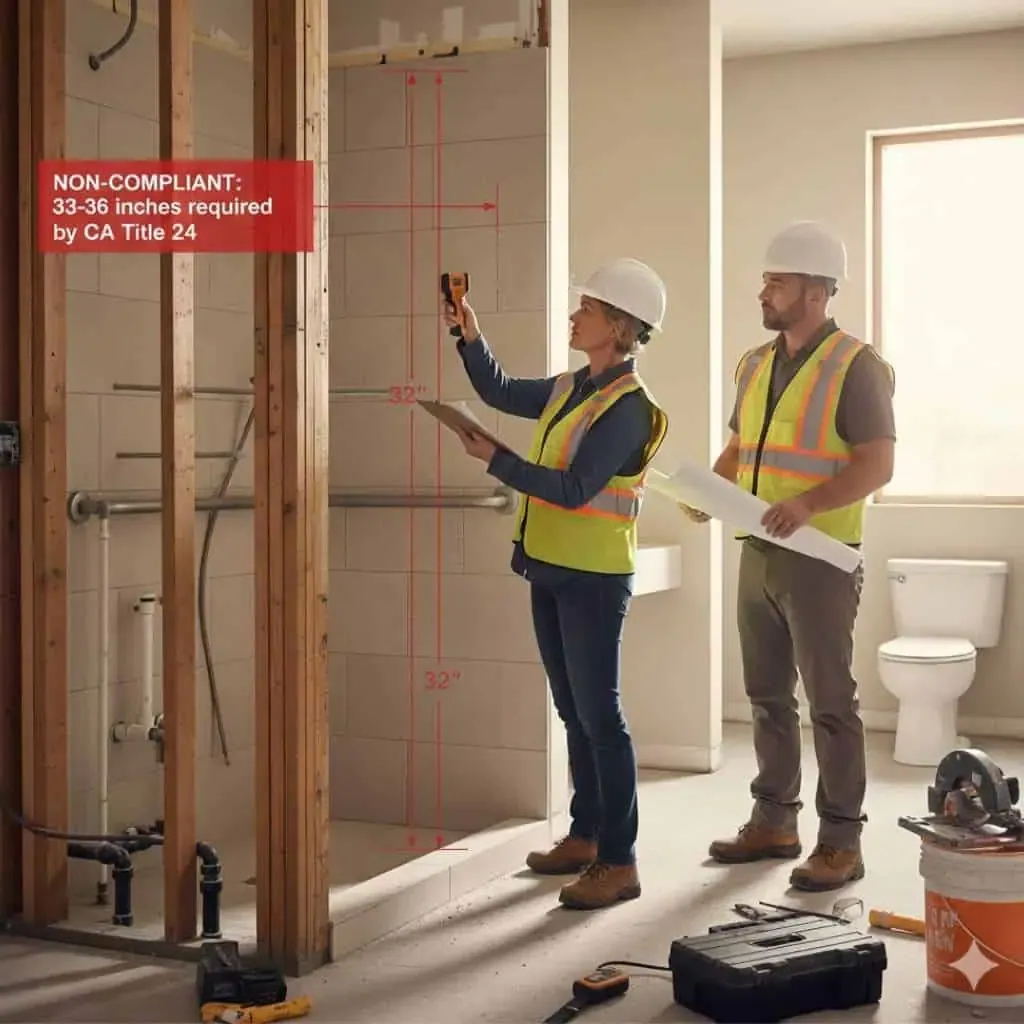
No being an inch off won’t slide in California. Title 24 is far less forgiving than federal ADA when it comes to construction tolerances.
In federal ADA inspections, inspectors may apply a reasonable tolerance (usually ±1/2″) in some field conditions. But CBC/Title 24 inspections do not assume those tolerances unless the code explicitly allows them which is rare. If your grab bar ends at 32 instead of 33 , that’s not close. That’s noncompliant.
This matters during:
Plan review: where CAD drawings may show compliant dimensions
Construction: where tile build-up, backing, and trim create hidden shrinkage
Final CASp inspection: where as built beats as-planned every time
That’s why contractors and owners should verify as built conditions with accurate tools not assumptions. And why it’s smart to involve a CASp before the final punch list.
Why CASp Verification Prevents Redo Work
Most ADA shower fixes cost more after tile is installed. When controls are embedded, waterproofing is sealed, and partitions are set, even minor corrections mean demo.
That’s where a CASp inspection (Certified Access Specialist Program) protects you:
By identifying Title 24 triggers early, especially when a project crosses from federal only into state regulated
By confirming field measurements match drawn specs before materials go in
And by helping you avoid “it passed city inspection” doesn’t mean it passed ADA” surprises
If you’re building or remodeling bathrooms, showers, or changing rooms in California, get a Title 24-savvy inspection team involved early. A CASp report isn’t just paperwork it’s protection from expensive, code driven rework.
CASp Inspection Reality Check for Showers
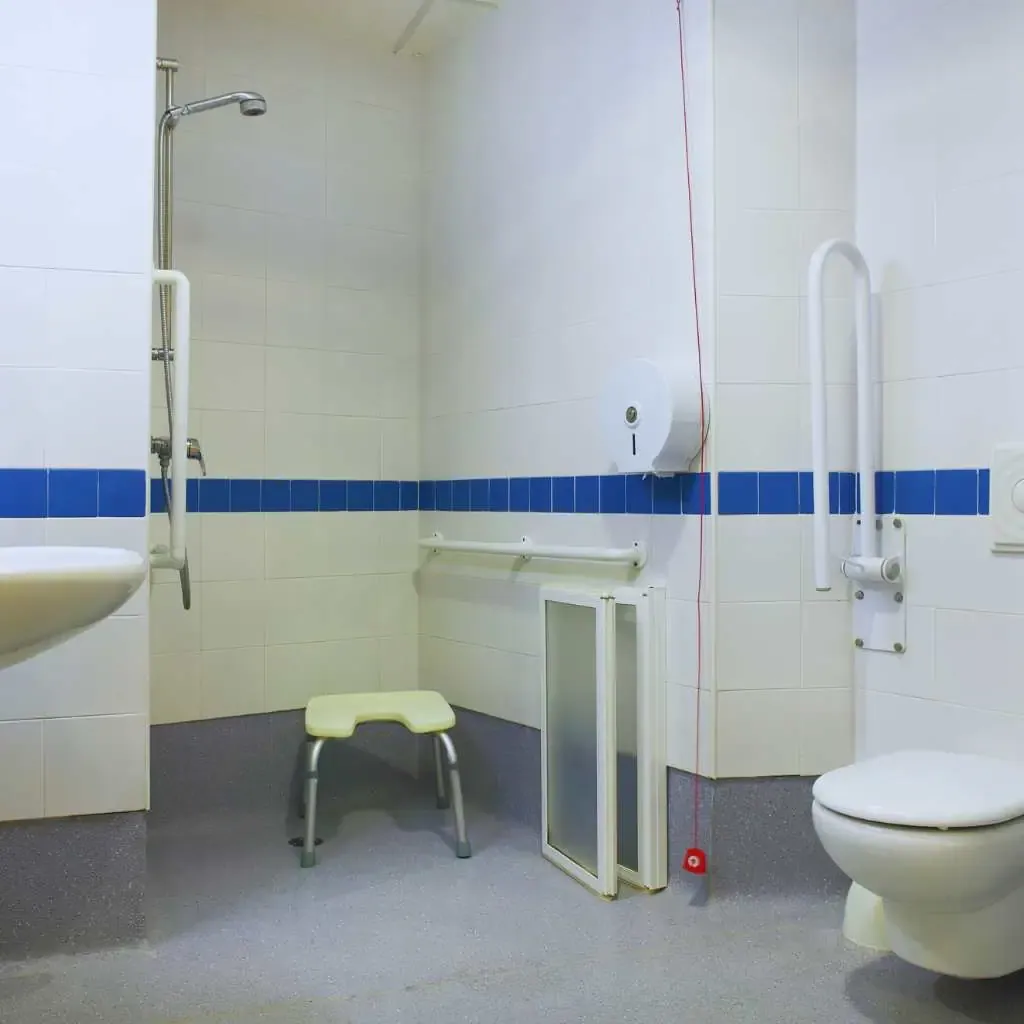
What Does a CASp Inspector Look at in Shower Areas?
Yes, it’s more than just the shower stall. A proper CASp inspection doesn’t stop at pan size or grab bar count it looks at the full usability of the space.
Here’s what gets evaluated in the field:
Approach and clearance zones: Is there 30×48 space outside the shower? Is it flat, accessible, and unobstructed?
Door or curtain swing conflicts: Does anything intrude into the required maneuvering area or block approach during use?
Reach range compliance: Can a seated or standing user access the controls, spray unit, and soap within regulated reach?
Adjacent fixtures: In combination toilet/shower setups, is the transfer path between them compliant and unobstructed?
Surface slope and water management: Is the shower draining without pooling into adjacent paths of travel?
CASp inspectors view this space through the lens of both functional access and technical code accuracy. Passing city inspection doesn’t guarantee ADA or Title 24 compliance CASp sees what liability looks like.
When Should You Get a CASp Review for Shower Compliance?
The cheapest time to get it right is before tile goes on. That’s why plan-phase CASp reviews are gaining traction especially on remodels where space is tight and dimensions are borderline.
Here’s how timing changes everything:
Plan review catches layout issues before they’re built, like grab bar misalignment or control location problems.
Framing walk-throughs help verify that backing is in the right place and that clearances match what’s on paper.
Post-install inspections (the most common request) often identify violations that require costly demo and reconstruction.
Bottom line: if you’re building showers in hotels, gyms, schools, or multifamily units, book a CASp review before waterproofing starts. That’s when corrections are affordable not after you’re staring at finished tile and noncompliant grab bars.
Pro tip: owners who involve a CASp early usually avoid rework and build long-term legal defensibility into their projects.
For property owners managing multiple guest rooms or units like hotels, motels, and extended-stay facilities ADA shower compliance isn’t one-size-fits-all. Unit scoping, dispersion, and transfer-type rules shift based on the project. Our Hotel & Motel ADA Compliance Consulting service helps clarify these details early, before they trigger rework or noncompliance findings.
Common Questions Owners Ask Before Renovating Showers
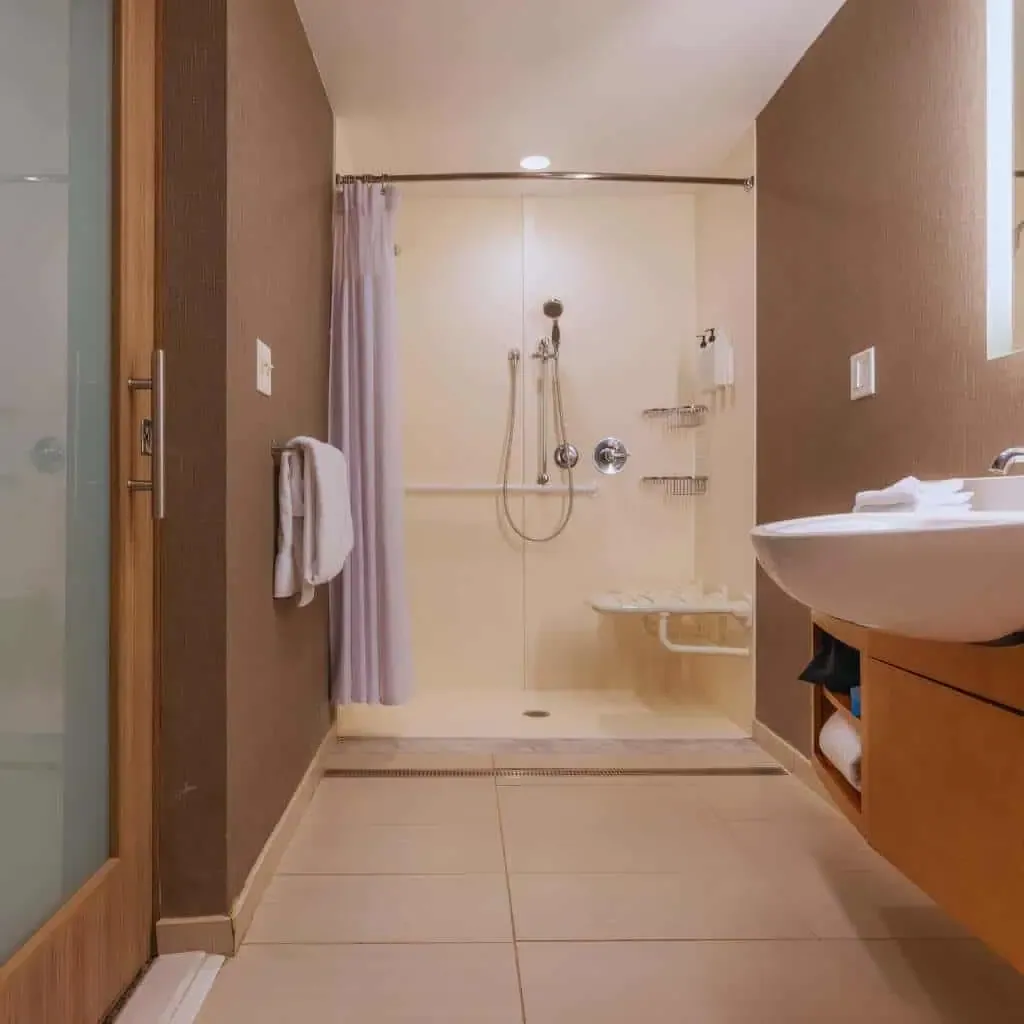
Do Apartment Amenity Showers Have to Be ADA/Title 24 Compliant?
Yes, if the amenities are shared by tenants or guests. Under both the ADA and California Building Code (Title 24), shared-use amenities like gym showers, pool facilities, or lounge bathrooms must meet accessibility requirements. This applies whether the complex is new construction or undergoing a major renovation. Even in private buildings, if a shower is considered a public accommodation (e.g., leasing office with a shower, clubhouse restrooms), compliance is required.
Private, individual use showers inside residential units may be exempt, but the surrounding facility context matters. A CASp review helps clarify the obligation early before walls go up.
Do Hotel Guestroom Showers Have Different Requirements Than Common-Area Showers?
Yes. Guestroom showers follow the scoping rules under ADA Section 224 and CBC Chapter 11B for transient lodging. Some must be transfer-type, others roll in. The requirements depend on the total room count, dispersion rules, and accessible route availability.
Meanwhile, showers in fitness centers, spas, or locker rooms within the hotel fall under common-use regulations. These typically require roll-in types with specific approach and grab bar configurations. Mistaking one for the other is a common source of failed inspections during CASp walkthroughs.
Can I Remodel One Shower and Leave the Rest Alone?
Not always. If you’re altering a space that triggers path of travel obligations or upgrading multiple fixtures in a facility, the shower may fall under ADA Title III or CBC accessibility upgrade requirements.
California’s Title 24 requires a percentage of budget allocation toward accessibility improvements when the cost of alterations exceeds the current threshold (e.g., $204,000 in 2025 check for updates). Even if only one shower is being renovated, restrooms, door hardware, and route accessibility may come under review.
Are There 2025 Changes to California ADA Shower Requirements?
No confirmed changes to ADA shower specs in 2025 unless specific CBC updates are issued. As of now, there’s no new code section altering transfer or roll-in shower requirements.
However, accessibility regulations in California can update via CBC amendments. The 2022 California Building Standards Code (effective January 1, 2023) remains the active code. Always verify against the California Building Standards Commission or consult a CASp to catch pending or jurisdiction-specific updates.
What’s the Most Common Reason Accessible Showers Fail Final Inspection?
Blocked clearances and incorrect hardware placement. Common triggers for noncompliance include:
Grab bars mounted too far from seat edges
Shower controls installed outside the 38–48″ vertical reach range
Thresholds over ½ inch in height
Doors or partitions encroaching on approach space
Seat placement that doesn’t align with the required wall
These are rarely cosmetic issues. They often require destructive rework tile demolition, fixture relocation, and failed CO delays. Getting it right during plan review or early field framing avoids expensive corrections.
Practical Next Steps to Stay Compliant in California
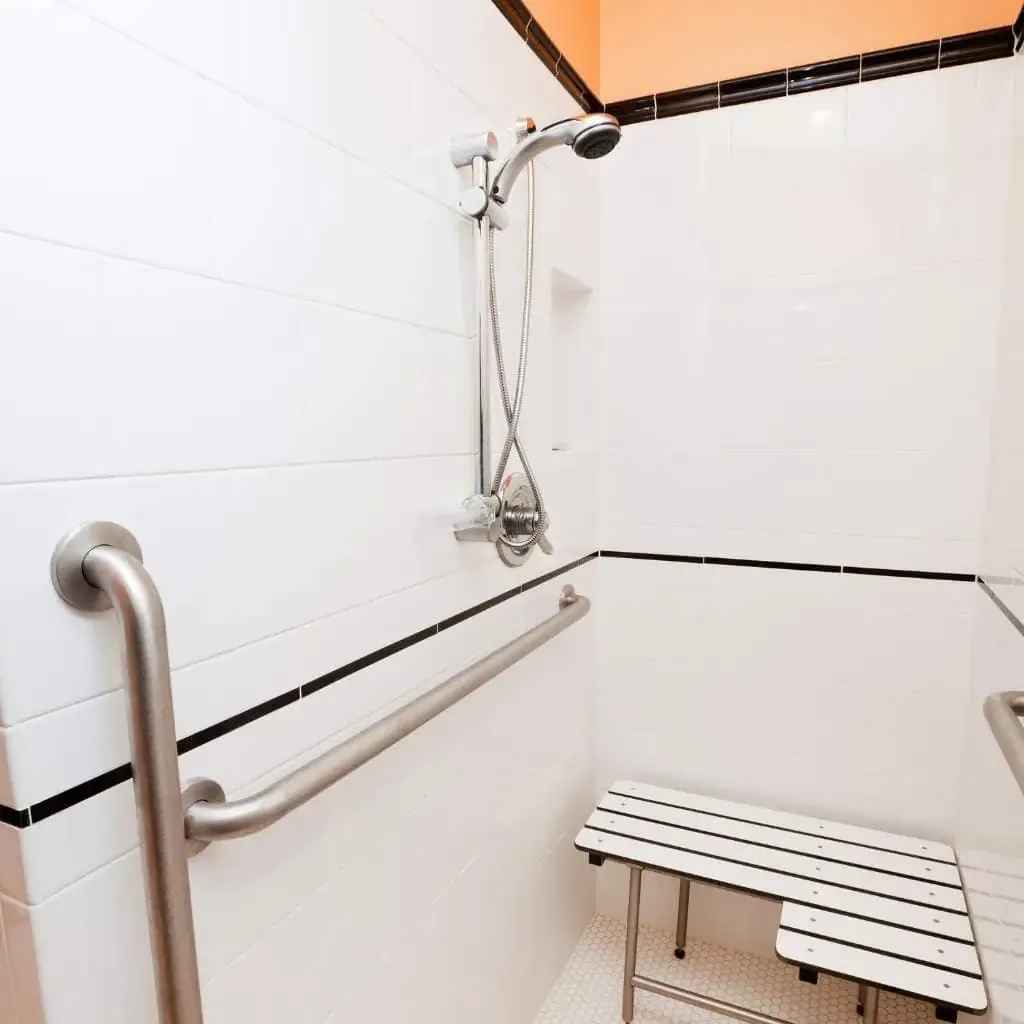
Before you build or renovate take a hard look at the basics. Know which shower type applies (roll-in vs transfer), verify the clear floor space, and measure entry clearances accurately. Then check your grab bars, control locations, seat configuration, and floor slope. These aren’t finish-stage issues. They’re structural compliance points that determine whether you pass final inspection or get stuck in rework.
Here’s what’s at stake:
Failed final inspection = occupancy delays
Noncompliant conditions = expensive demolition and retrofit
Improper documentation = increased exposure to access lawsuits
Missed clearance or hardware errors = tenant or guest injury risk
That’s why smart owners don’t wait until punch list day to find out something’s wrong. A compliance first approach saves time, money, and legal risk.
If you’re planning a build or upgrade in California, the best move is to schedule a CASp review before construction begins.

Written by Emily Johnson
Emily Johnson is a Certified Access Specialist (CASp) Inspector and is passionate about making spaces accessible for all. With over 10 years of experience and degrees in Civil Engineering and Architecture, she inspires others while championing ADA awareness.
RECENT POSTS
CATEGORIES
Get a free quote today!
By clicking “Submit”, you are signing up to receiving emails from us. You can unsubscribe whenever you like. SMS rates may apply.
Want To Know More About ADA Accessibility And How To Get Compliant?
Check out our blog!