California ADA Toilet & Grab Bar Height Requirements for Commercial Bathrooms

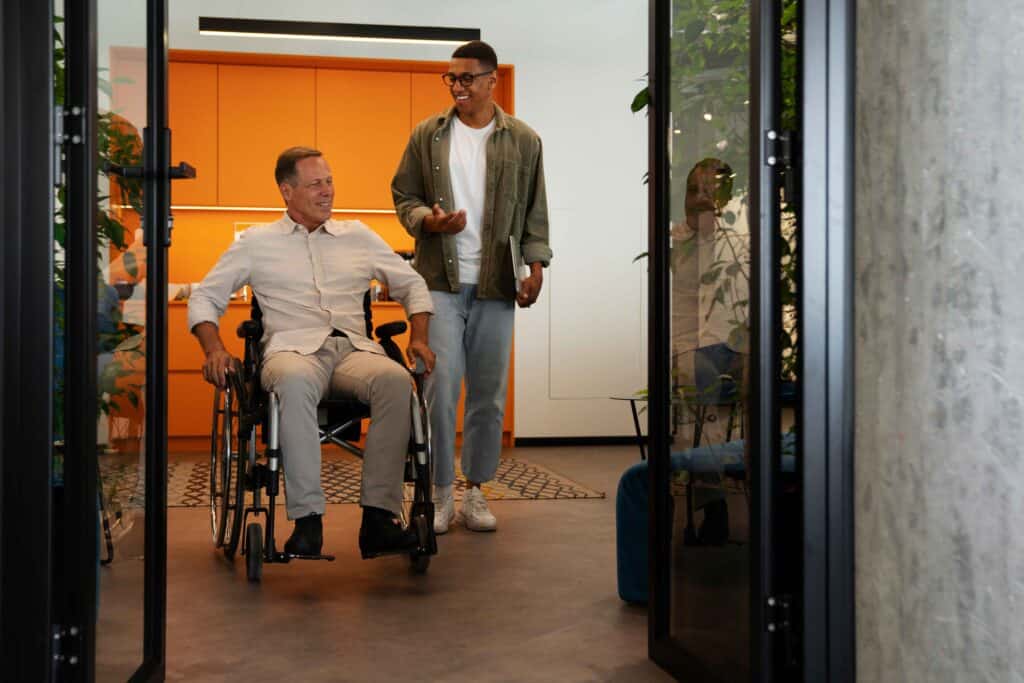
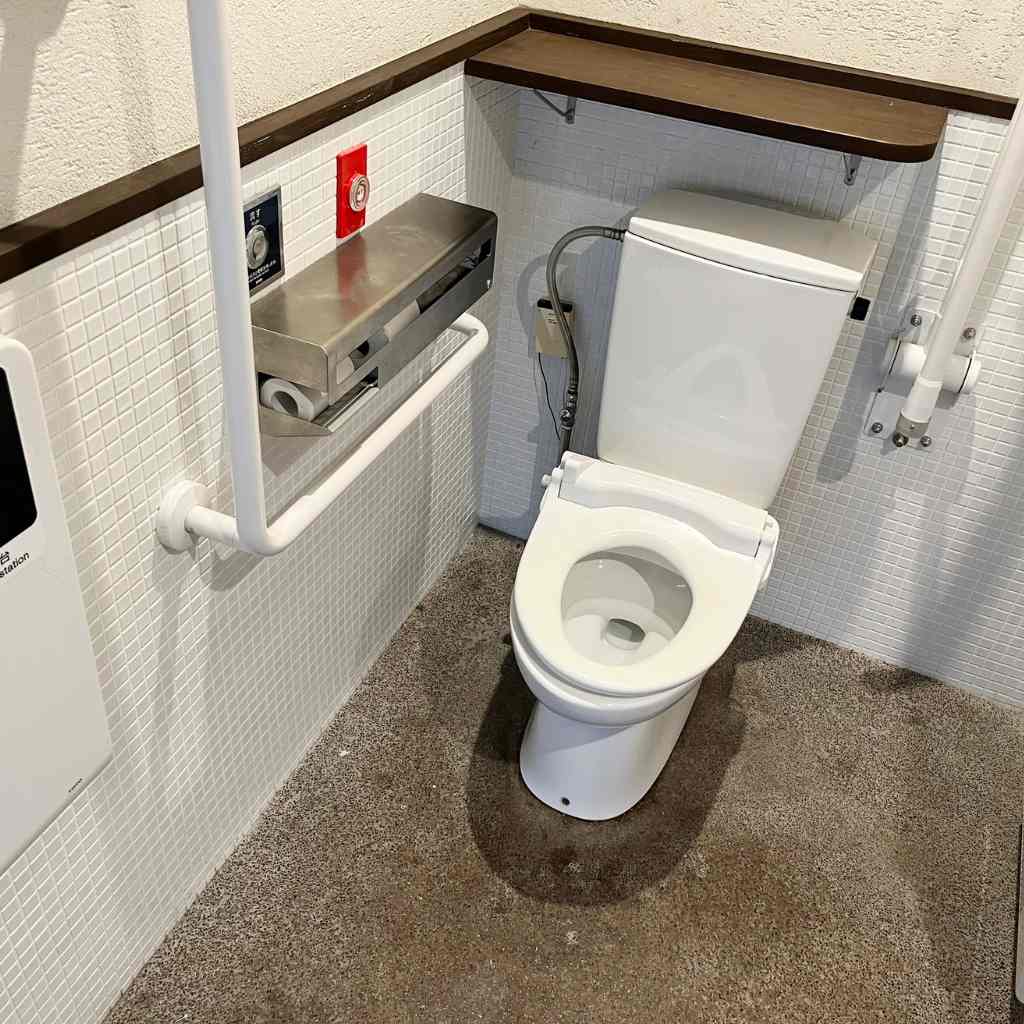
Commercial bathroom showing ADA toilet height and grab bar placement measured during a California accessibility inspection

ADA toilet and grab bar height compliance in California means installing toilets and grab bars at exact, enforceable heights and locations under the federal ADA and California Building Code Title 24 Chapter 11B so people with disabilities can safely transfer, sit, and use the restroom independently. In commercial bathrooms, the height of a handicap toilet, grab bar placement, and required clearances are measured precisely and enforced during plan review, field inspections, and CASp evaluations.

Here’s what that means for you. This article focuses on the toilet and grab bar heights, locations, and clearances that most often trigger findings in hotels, restaurants, retail spaces, schools, and other commercial properties. It does not cover residential remodels or homeowner upgrades. In California, meeting federal ADA standards alone is not enough. The state applies its own building code requirements, and inspectors enforce the stricter rule when standards overlap.

Most bathroom violations come down to measurements off by an inch or less. Those small errors routinely lead to failed inspections, expensive rework, delayed openings, and avoidable compliance risk.

Which Accessibility Standards Govern Toilet and Grab Bar Heights in California?

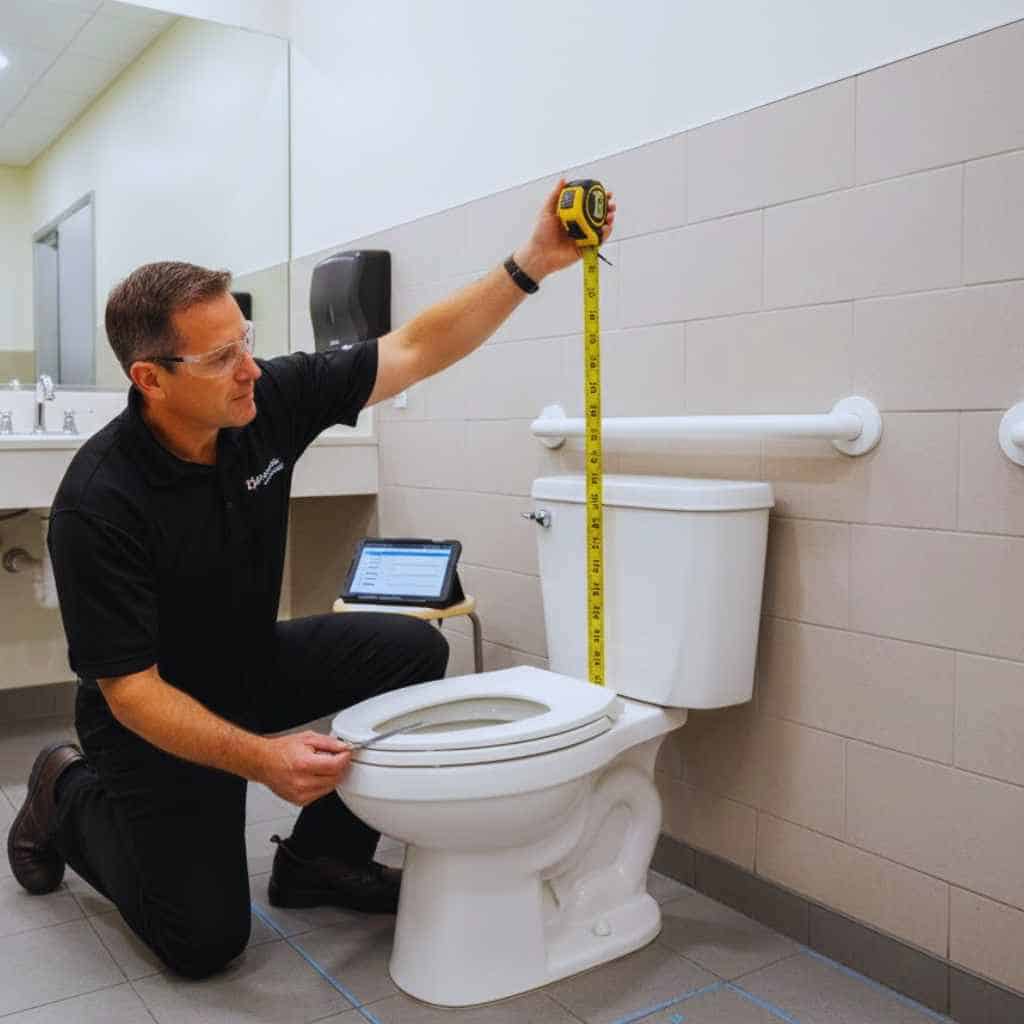
bathroom showing ADA toilet height measured during a California accessibility inspection

Before you look at measurements, you need clarity on which rules actually control compliance. This is where many commercial projects go off track. Owners assume they followed the ADA, only to be surprised when a plan reviewer or inspector applies a different standard. California does not default to a single accessibility code, and enforcement is not flexible.

Is ADA Compliance Alone Enough for Commercial Bathrooms in California?

No. The ADA is a federal civil rights law that sets baseline accessibility requirements nationwide, but California goes further. Commercial bathrooms in California must comply with the California Building Code, Title 24 Chapter 11B, in addition to the ADA. When both standards apply, inspectors enforce the stricter requirement.

Here’s what that means in real inspections. A restroom can be laid out to ADA dimensions, approved at an early design stage, and still fail once Title 24 measurements are checked in the field. This commonly happens when toilet heights, grab bar placement, or required clearances meet federal rules but fall outside California’s more specific requirements. During plan review, field inspections, and CASp evaluations, inspectors do not average standards or allow partial credit. If Title 24 is stricter, that is the rule that controls.

Many failed inspections stem from projects designed to ADA standards alone, without accounting for California’s added enforcement layer.

Which California Accessibility Code Version Applies to My Project?

It depends on when your permit was issued. California enforces the edition of the Building Code that was in effect at the time your project was permitted, not the version currently posted online and not what applied to a prior renovation.

This is where remodels and tenant improvements create problems. Even limited work, such as reconfiguring a restroom or replacing fixtures under a new permit, can lock your project into a newer code edition. Owners often point to bathrooms that passed inspection years ago and assume those measurements are still acceptable. They are not.

Here’s the practical takeaway. Toilet and grab bar heights are enforced against the adopted code tied to your permit. What worked before, what another property passed with, or what a contractor remembers from an older job does not control current compliance. This is exactly why inspectors measure toilet height and grab bar placement so precisely, and where most height-related failures begin.

What Is the Required Height of an Accessible Toilet in California Commercial Bathrooms?

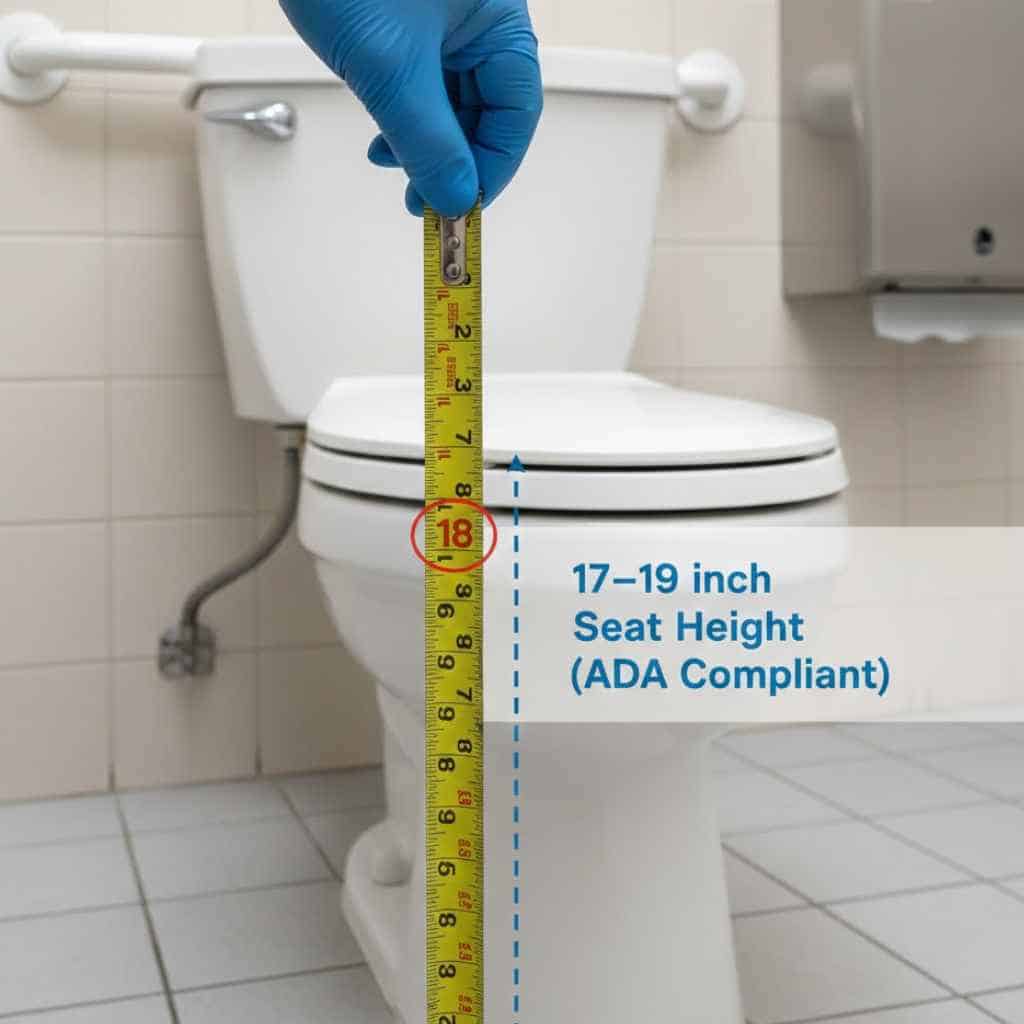
ADA Toilet Seat Height Measurement from Finished Floor

Once you understand which standards apply, toilet height is usually the first measurement inspectors check. This is also where many projects fail. The height of a handicap toilet is not a range you aim for. It is a precise requirement that must be met exactly as measured in the field.

What Is the Required Toilet Seat Height Under California ADA Rules?

Yes. The required toilet seat height in California commercial bathrooms is 17 to 19 inches measured from the finished floor to the top of the toilet seat. This measurement is enforced under both the ADA and California Building Code Title 24 Chapter 11B.

It’s important to be clear about what is being measured. Seat height means the distance from the finished floor surface to the top of the toilet seat in its installed condition. Rim height is the height of the porcelain bowl without the seat and is not used for compliance. Inspectors do not rely on manufacturer specs or product labels. They measure what is physically installed.

Here’s why this matters. Flooring thickness, tile buildup, underlayment, and the specific seat you install all affect the final height. If the installed seat measures below 17 inches or above 19 inches, the toilet fails inspection, even if the bowl itself was sold as ADA compliant.

How Do Inspectors Measure Toilet Height During a CASp or Field Inspection?

They measure the installed condition, not the design intent. Inspectors use tape measures or laser tools and measure from the finished floor to the top of the seat at the highest point. They do not average measurements or rely on drawings.

This is where disputes usually start. Contractors reference cut sheets. Owners point to approved plans. Inspectors measure what is actually there. Added flooring, uneven tile, or a thicker replacement seat can push the height outside the allowed range. Seat compression myths also come up. Inspectors do not sit on the toilet or guess compression. They measure the toilet as installed.

Uneven floors cause problems as well. Measurements are taken where the user sits, not where the floor slopes away or dips.

Can Comfort-Height or Standard Toilets Meet California ADA Requirements?

Yes, if the installed seat height ends up between 17 and 19 inches. The issue is that many residential comfort-height toilets are designed around typical home installations, not commercial conditions.

In commercial bathrooms, thicker flooring systems, different seats, and wall finishes often push the final height too high. This is why toilets marketed as ADA still fail inspections. The label reflects a typical installation scenario, not your finished condition. Inspectors only care about the measured result.

Is There Any Tolerance if a Toilet Height Is Slightly Off?

No. There is no formal tolerance for toilet seat height in California commercial bathrooms. If the measured height falls outside the 17 to 19 inch range, the toilet does not comply.

This is where the contractor said it was fine argument breaks down. Inspectors do not accept judgment calls, past approvals, or experience as substitutes for measurement. If the toilet measures outside the allowed range during inspection, it fails. That is why toilet height corrections are among the most common and expensive accessibility fixes after construction.

What Are the ADA Grab Bar Height and Placement Requirements in California?

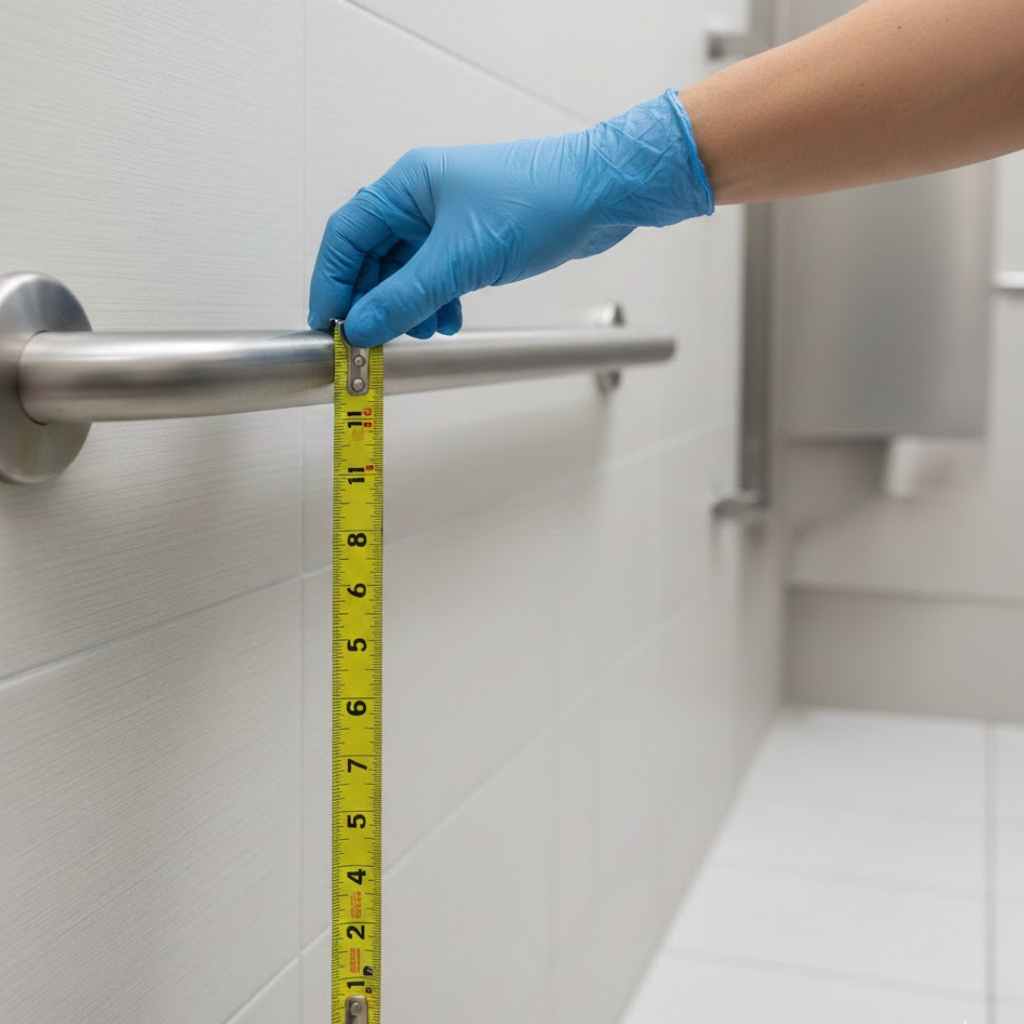
ADA Grab Bar Height Measured to Gripping Surface

Grab bars are not accessories. In California commercial bathrooms, they are treated as load-bearing safety devices, and inspectors measure them just as carefully as toilet height. Most failures happen not because grab bars are missing, but because they are installed at the wrong height, in the wrong location, or in a way that limits safe use.

What Height Must Toilet Grab Bars Be Installed At?

Yes. Toilet grab bars must be installed 33 to 36 inches above the finished floor, measured to the top of the gripping surface. This height range is enforced under both the ADA and California Building Code Title 24 Chapter 11B.

The measurement is taken to the top of the bar where the hand actually grips it. Measuring to the centerline, the bottom of the bar, or the mounting flange is incorrect and will fail inspection. Side wall and rear wall grab bars follow the same vertical height rule. If either bar measures outside the 33–36 inch range in the field, it does not comply.

Where Must Grab Bars Be Located Around the Toilet?

Grab bars must be positioned so a user can transfer safely and maintain balance while seated. Placement errors are among the most common inspection findings.

Where Should the Side Wall Grab Bar Be Positioned?

Yes. A side wall grab bar is required and must be installed parallel to the toilet on the side wall closest to the toilet. The bar must be positioned relative to the toilet centerline and rear wall so it is reachable during a side transfer.

The side wall grab bar must be at least 42 inches long. It must start no more than 12 inches from the rear wall and extend at least 54 inches from the rear wall. Inspectors regularly cite obstructions here. Toilet paper dispensers, shelves, coat hooks, or other accessories installed within the gripping length reduce usability and can cause a failure even if the bar itself is the correct size.

Where Should the Rear Wall Grab Bar Be Positioned?

Yes. A rear wall grab bar is also required and must be centered behind the toilet. The bar must be mounted horizontally on the wall behind the toilet to assist with sitting and standing.

The rear wall grab bar must be at least 36 inches long and centered on the toilet centerline. Flushometer valves often interfere with this requirement. Inspectors do not allow the grab bar to be shifted arbitrarily to accommodate plumbing. If the valve location prevents proper centering, the plumbing layout must be adjusted. Tank-style toilets present different spacing constraints, but the centering requirement still applies.

What Diameter, Grip, and Finish Must Grab Bars Have?

Yes. Grab bars must have a diameter between 1¼ inches and 1½ inches and provide a continuous, unobstructed gripping surface. The bar must allow a full hand grip without sharp edges or finger grooves.

Decorative or oversized bars commonly fail inspection. Square profiles, deeply contoured designs, or ornamental shapes often prevent a secure grip, even if the bar appears sturdy. Finish matters as well. Grab bars must be non-slip and non-abrasive. Highly polished or slick finishes that become slippery when wet are frequently cited.

How Much Clearance Must Grab Bars Have From the Wall?

Yes. Grab bars must be installed with 1½ inches of clearance between the wall surface and the inside face of the gripping surface. This clearance allows the user’s hand to wrap fully around the bar.

Oversized mounting flanges are a frequent problem. Even when the bar diameter is correct, large decorative flanges can reduce usable clearance and prevent a proper grip. Inspectors measure the actual space available for the hand, not the manufacturer’s stated standoff.

How Strong Do Grab Bars Have to Be to Pass Inspection?

Yes. Grab bars must be securely anchored and capable of supporting at least 250 pounds of force without movement. This requires proper structural backing behind the wall surface.

Retrofit installations fail here often. Bars installed into tile or drywall without adequate backing may flex, loosen, or pull away from the wall. Inspectors commonly test stability by applying force by hand. If the bar moves, even slightly, it will be cited.

This is why grab bar compliance is not just about height and placement. It is about treating the grab bar as a safety device that must be sized, positioned, and anchored correctly the first time.

What Clearance Requirements Apply to the Accessible Toilet Use Zone?

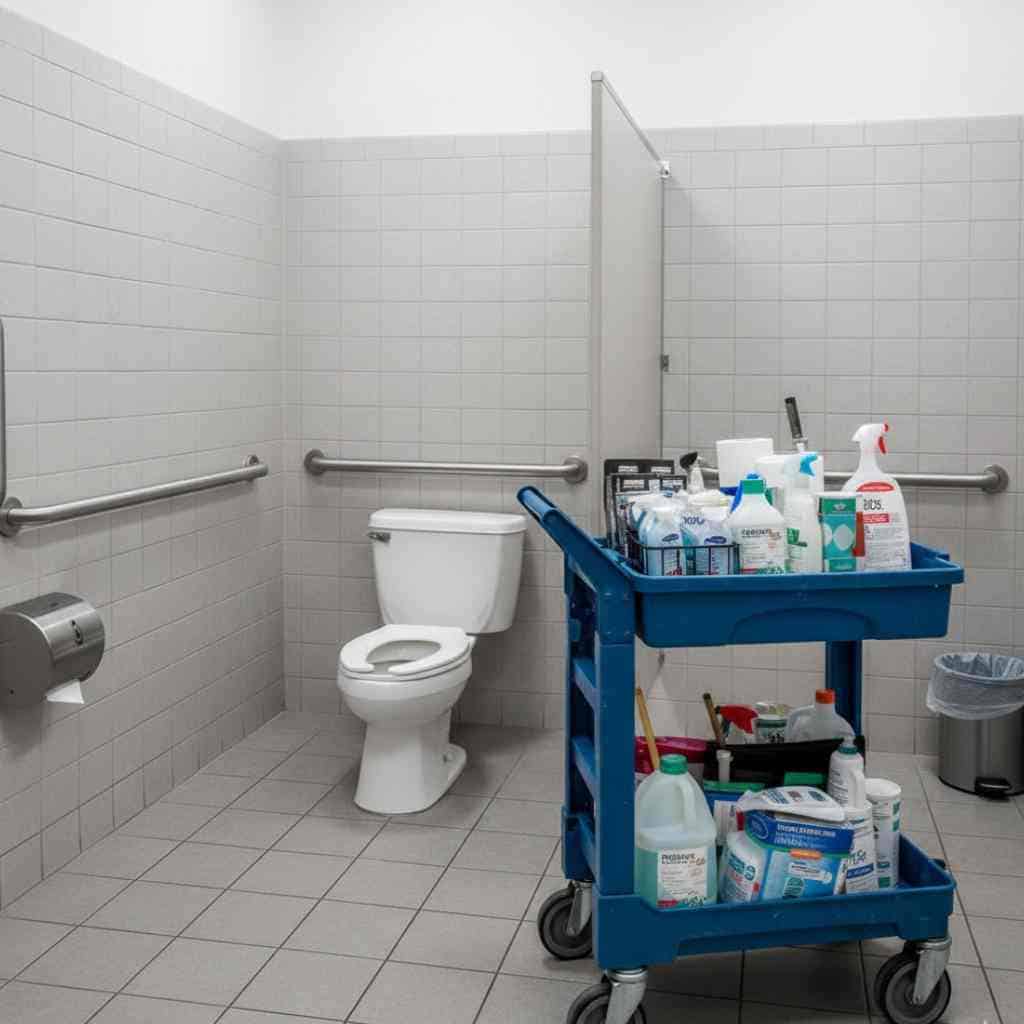
Clear floor space next to an accessible toilet showing required 60-inch clearance in a commercial restroom

Height and grab bars are only part of compliance. Inspectors evaluate the toilet use zone as a single system: the space a person needs to approach, transfer, and maneuver safely. This is where projects that hit the numbers still fail. Clearances are measured strictly, and small encroachments count.

What Clear Floor Space Is Required at an Accessible Toilet?

Yes. A clear floor space must be provided at the toilet so a wheelchair user can approach and transfer without obstruction. In plain terms, this is the open, usable area next to and in front of the toilet that must remain free of fixtures and furniture.

For standard accessible toilet configurations, inspectors verify:

  • A minimum clear width of 60 inches measured perpendicular from the side wall to allow side transfer.

  • Clear depth of 56 inches for wall-hung toilets or 59 inches for floor-mounted toilets, measured from the rear wall to the front edge of the clearance.

Common violations are not structural. Trash cans, paper towel bins, shelves, and even decorative planters routinely intrude into this space. Inspectors do not treat these as temporary. If an item occupies the clearance at inspection, the clearance is not compliant.

What Toilet Centerline and Side Clearance Measurements Are Required?

Yes. The toilet must be positioned so its centerline is 16 to 18 inches from the adjacent side wall. This measurement is critical because it governs how a user transfers and how grab bars align with the body.

Here’s why this matters. If the centerline is too close to the wall, there isn’t enough space to transfer. If it’s too far away, grab bars no longer line up correctly. Remodels commonly cause this issue. Moving walls, changing partitions, or replacing fixtures without rechecking centerline distances often pushes the toilet outside the allowed range, even when everything else looks correct.

Does Door Swing Affect Toilet Clearance Compliance?

Yes. Door swing can invalidate an otherwise compliant layout.

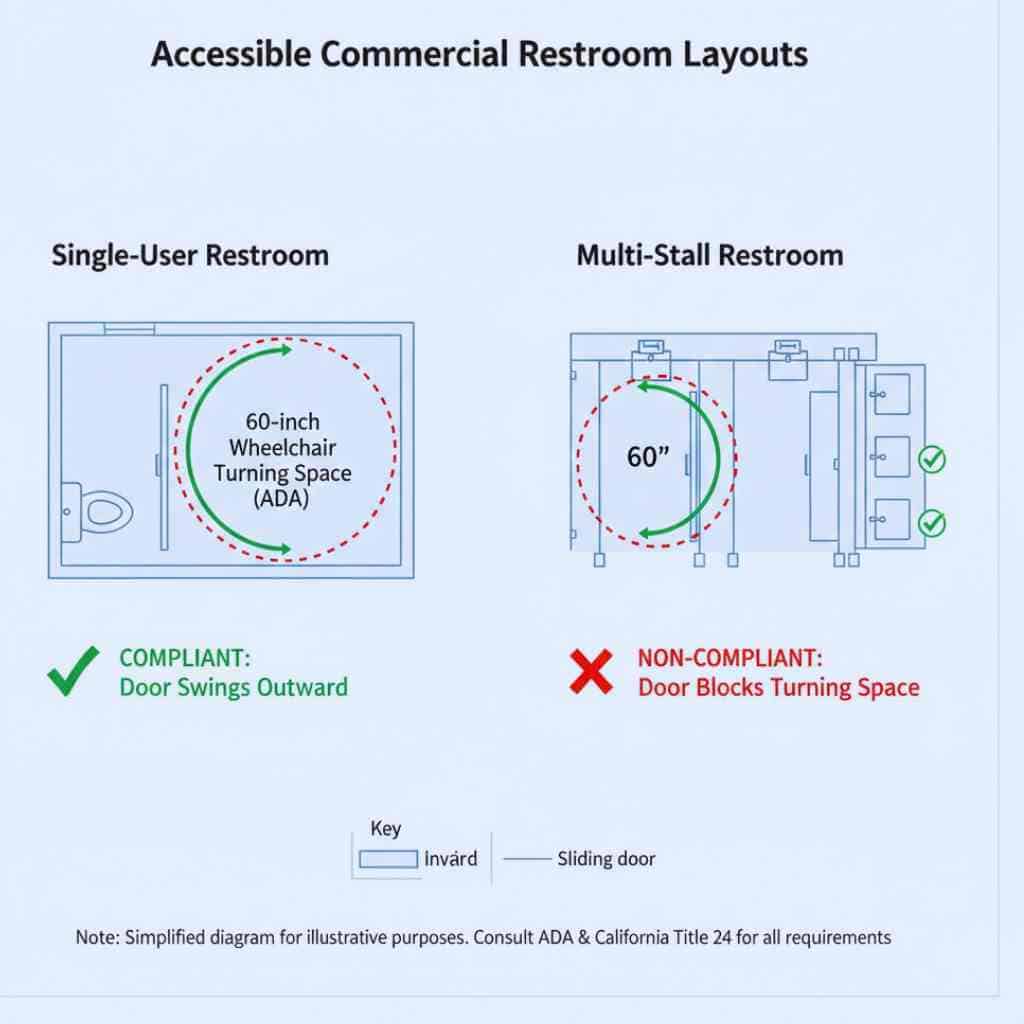
If a door swings into the required clear floor space or overlaps the 60-inch-wide toilet clearance, inspectors will cite it. This is especially common in single user restrooms where inward-swinging doors are added late in the project. Hardware changes, closer adjustments, or door replacements can also alter swing arcs enough to cause noncompliance. Inspectors evaluate the door in its fully open position, not how it is usually left.

What Turning Space Is Required in Commercial Restrooms?

Yes. An accessible restroom must provide adequate turning space for a wheelchair. This can be met in one of two ways:

  • A 60-inch diameter circular turning space, or

  • A T-shaped turning space that fits within a 60-inch by 60-inch area.

Turning radius and turning space are not the same thing. Inspectors check the actual usable area, not the drawn symbol on a plan. Real world obstructions cause failures here. Partitions, baby changing stations, coat hooks, and wall-mounted accessories frequently reduce turning space below what is required. Even when installed per plan, these elements can eliminate compliant maneuvering space once the room is built.

This is why clearance compliance is evaluated last and enforced hardest. The toilet use zone must function as a whole, not just meet isolated measurements.

Why Height Compliance Alone Does Not Guarantee a Passing Inspection

One of the most common misunderstandings in California accessibility compliance is thinking that hitting the right height measurements is enough. It isn’t. Inspectors do not evaluate toilets, grab bars, or clearances in isolation. They evaluate how the entire restroom functions for a real person using it.

Can a Toilet Be the Correct Height and Still Fail ADA or CASp Review?

Yes. A toilet can be perfectly within the 17 to 19 inch seat height range and still fail inspection.

Here’s why this happens. Toilet height, grab bar placement, clear floor space, centerline positioning, door swing, and turning space all work together as one system. If any part of that system interferes with safe approach, transfer, or maneuvering, the restroom does not comply. Inspectors regularly fail bathrooms where the toilet height is correct, but the grab bar is blocked, the clear floor space is reduced, or the door swing cuts into the required area.

This is also where almost compliant layouts break down. A grab bar installed at the correct height but shifted slightly to avoid plumbing, a trash can placed within the clearance zone, or a door that swings too far can undo otherwise correct measurements. Inspectors look at usability, not just numbers.

Why Approved Plans Still Fail CASp or Field Inspections

Yes. Plans that pass review can still fail once the space is built.

Plan review is based on drawings and dimensions. Field inspections and CASp evaluations are based on what actually exists. Changes during construction are the most common cause of failure. Contractors substitute fixtures, finishes add thickness, accessories are installed after approval, or walls shift slightly during framing. Each of those changes can affect clearances and alignment.

Accessory installation is a frequent problem. Paper towel dispensers, baby-changing stations, shelves, and coat hooks are often added late and placed where they fit best visually, not where they preserve required clearances. Inspectors do not accept it wasn’t on the plans as a justification. They evaluate the final condition.

This is why inspections focus on the built environment, not intent. A restroom must function correctly as constructed. Passing inspection requires the entire toilet use zone to work together, not just individual elements to meet isolated measurements.

What Are the Most Common CASp Findings for Toilets and Grab Bars?

Examples of common CASp inspection findings involving toilet height, grab bars, and clearance issues

After enough inspections, patterns are impossible to ignore. Most CASp findings around toilets and grab bars are not edge cases or obscure code interpretations. They come from the same repeat mistakes showing up across hotels, restaurants, retail spaces, schools, and office buildings throughout California.

What Toilet and Grab Bar Issues Most Often Trigger CASp Findings?

Yes. Most CASp findings come from small installation errors, not missing features. Inspectors routinely cite bathrooms where required elements exist but do not function correctly together.

The most common findings include:

  • Toilet seat height outside the allowed range, usually caused by added flooring or seat substitutions after rough-in

  • Grab bars installed at the wrong height, often measured to the wrong reference point

  • Grab bars blocked or shortened by accessories, such as toilet paper dispensers or shelves placed within the gripping area

  • Insufficient clear floor space, most often reduced by trash cans or late-added fixtures

  • Incorrect toilet centerline positioning, especially after wall or partition changes

  • Door swing intruding into required clearances, common in single-user restrooms

These are not judgment calls. Inspectors measure what exists at the time of inspection. If any one of these conditions interferes with use, the restroom does not comply.

Which CASp Findings Are the Most Expensive to Fix After Construction?

Yes. Some findings cost far more to correct once finishes are in place. These issues typically require demolition or rework rather than simple adjustments.

The highest-cost corrections usually involve:

  • Plumbing rough-in errors that place the toilet outside centerline or clearance limits

  • Grab bars installed without proper backing, requiring wall removal to add structure

  • Door location or swing conflicts that force framing or door replacement

  • Partition layouts that eliminate turning space, especially in compact restrooms

By the time these issues are identified, tile is installed, walls are finished, and fixtures are set. Fixing them means undoing completed work, not just moving accessories.

Why CASp Inspectors Focus on These Issues First

Yes. These findings directly affect usability and safety. Inspectors prioritize elements that determine whether a person can approach, transfer, and use the toilet independently.

Height errors, blocked grab bars, and clearance conflicts are not technicalities. They are the conditions most likely to prevent use or cause injury. That is why they are cited consistently and corrected aggressively.

This pattern is also why early verification matters. Once construction is complete, correcting these issues is rarely simple and almost never cheap.

Do These Requirements Change Based on Bathroom Type or Use?

Single User vs Multi Stall Restroom Compliance Layout

Bathroom type can affect how requirements are applied, but it rarely removes them. Inspectors focus on how the restroom functions in real use, not how it is labeled on a door or described in policy.

Do Single-User or Unisex Restrooms Have Different Requirements?

Yes and no. Configuration matters more than the room label.

Single-user and unisex restrooms are still required to be accessible. The difference is not whether accessibility rules apply, but how the layout achieves them. In practice, inspectors expect the same core elements to work: correct toilet height, compliant grab bars, required clear floor space, and adequate turning space.

Where owners get caught is assuming a single-user room gets more flexibility because only one person uses it at a time. It does not. If the restroom is designated as accessible or serves the public, inspectors evaluate whether a user can enter, transfer, and maneuver safely, regardless of occupancy type.

Do Employee-Only Bathrooms Have to Meet ADA Toilet Requirements?

Yes and no. It depends on how the restroom functions within the building.

Employee-only bathrooms are not automatically exempt. In many commercial settings, especially restaurants, retail back-of-house areas, offices, and schools, inspectors expect employee restrooms to be accessible when they serve as the primary facilities for staff. California enforcement is often stricter here than owners anticipate.

What does not hold up is relying on internal policies or signage. Limiting access by rule does not eliminate physical accessibility obligations when the restroom is part of normal building operations. Inspectors look at how the space is used, not how access is described on paper.

Does Replacing a Toilet Trigger Full ADA Compliance?

Yes and no. It depends on whether the work is considered an alteration under the code.

Routine maintenance usually does not trigger full upgrades. Permitted alterations often do. Replacing a toilet in isolation may seem simple, but once flooring is replaced, walls are modified, or fixtures are relocated, the restroom is commonly evaluated against current accessibility requirements.

This is why simple replacements cause failures. A new toilet or seat can change height. New flooring can reduce clearances. Small changes compound, and inspectors measure the finished condition, not the intent behind the work.

Are Older Buildings or Previously Approved Bathrooms Exempt?

No. There is no blanket grandfathering.

Older buildings are not automatically exempt from accessibility enforcement. While existing conditions are considered, prior approvals do not protect a restroom once alterations, tenant improvements, or fixture replacements occur. Inspectors do not retroactively penalize old construction, but they do enforce compliance when work triggers review.

The practical takeaway is straightforward. Approval history does not shield a bathroom from findings once changes are made. Compliance is evaluated based on current conditions and applicable triggers, not past inspections.

How to Check Toilet and Grab Bar Compliance Before an Inspection

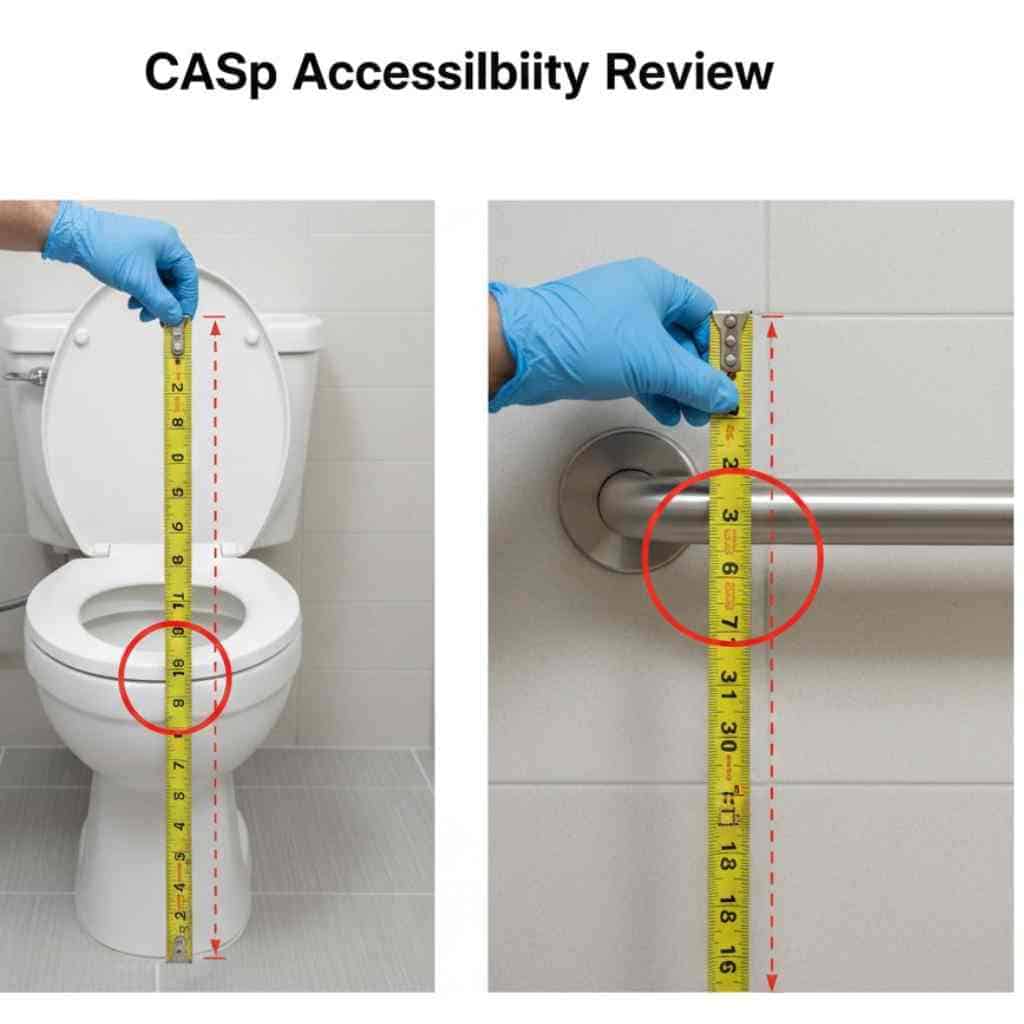
Accessibility Measurement Photos for CASp Review

Waiting for an inspection to discover problems is how small issues turn into expensive corrections. A basic pre-check, done before walls are closed or accessories are finalized, catches most failures early. Inspectors measure what exists, not what was intended, so the goal here is to verify the finished condition, not rely on plans or product labels.

What Measurements Should Property Owners Verify First?

Yes. These are the measurements that most often determine pass or fail. Start with the elements inspectors check immediately and move outward from the toilet.

Before you call for inspection, verify the following:

  • Toilet seat height
    Measure from the finished floor to the top of the toilet seat. It must fall between 17 and 19 inches. Do not rely on bowl specs or ADA labeling. Measure the installed seat.

  • Grab bar heights
    Measure to the top of the gripping surface, not the centerline or flange. Both side and rear grab bars must be 33 to 36 inches above the finished floor.

  • Grab bar placement
    Confirm the side wall bar is at least 42 inches long and properly positioned relative to the rear wall. Confirm the rear wall bar is at least 36 inches long and centered on the toilet.

  • Wall clearance at grab bars
    Measure the space between the wall and the inside face of the bar. You need 1½ inches of clear space for a proper grip. Oversized flanges often reduce usable clearance.

  • Toilet centerline
    Measure from the center of the toilet to the adjacent side wall. The centerline must fall between 16 and 18 inches. Small shifts during framing or partition work frequently cause failures here.

  • Clear floor space at the toilet
    Verify the 60-inch-wide clearance next to the toilet and the required depth (56 inches for wall-hung, 59 inches for floor-mounted toilets). This space must remain unobstructed.

  • Door swing
    Open the door fully and confirm it does not intrude into required toilet clearances. Inspectors evaluate the door in its maximum open position, not how it is usually left.

  • Accessory interference
    Check toilet paper dispensers, shelves, trash cans, baby-changing stations, and hand dryers. Anything within the clearance or gripping zones counts as an obstruction.

  • Grab bar stability
    Apply firm hand pressure. Grab bars must feel solid and unmoving. Any flex, rotation, or looseness will be cited, regardless of appearance.

These checks take minutes and prevent the most common findings inspectors issue.

What Photos and Documentation Help a CASp Review Go Faster?

Yes. Clear documentation can significantly streamline a CASp review. Inspectors still measure in person, but good documentation reduces questions and back-and-forth.

Useful documentation includes:

  • Measurement photos showing a tape measure clearly placed from floor to seat or grab bar

  • Side wall and rear wall views capturing grab bar placement relative to the toilet

  • Door swing photos showing the door fully open and its relationship to clear floor space

  • Labeled images with dimensions noted directly on the photo

Photos should reflect the finished condition, not rough framing. When measurements are visible and clearly labeled, inspectors can confirm intent quickly and focus on verifying compliance instead of uncovering surprises.

The goal of this step is simple: catch problems when they are still easy to fix, not after inspection forces costly rework.

When Should You Involve a CASp Specialist for Bathroom Compliance?

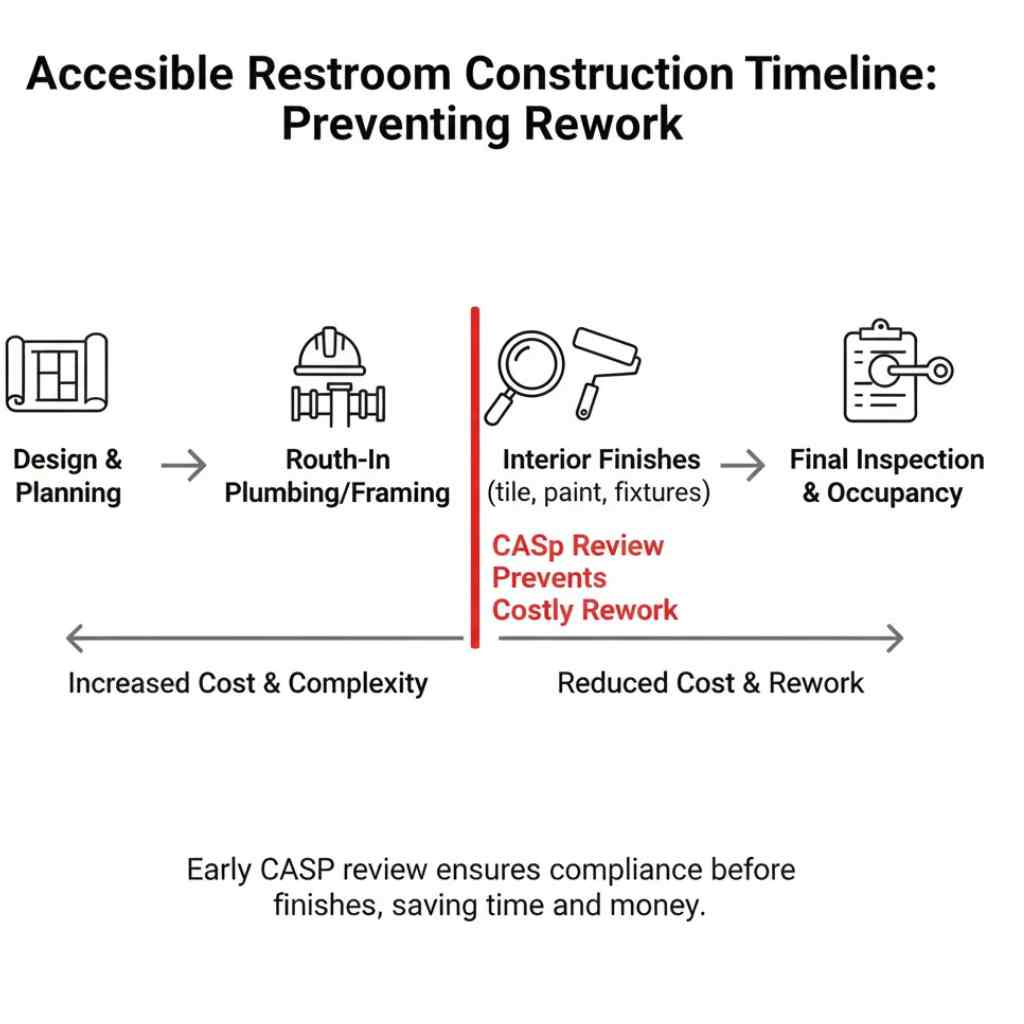
Timeline showing when a CASp review is most effective during commercial restroom construction before finishes and final inspection

DIY checks catch obvious issues. A CASp review catches the ones that cost real money when missed. The decision is less about effort and more about risk, timing, and scale.

When Is a CASp Review Recommended Instead of DIY Checking?

Yes. A CASp review is recommended when project risk or complexity exceeds simple verification. In practice, that threshold is reached sooner than many owners expect.

Bring in a CASp when:

  • You are remodeling or altering restrooms, even if the scope feels limited

  • There are prior violations or unresolved inspection comments

  • You operate multiple locations and need consistency across sites

  • You manage hotels or restaurants, where inspections are frequent and layouts are tight

  • Flooring, partitions, plumbing, or accessories are changing under permit

DIY checks confirm measurements. A CASp review evaluates how those measurements work together under enforcement conditions.

What Happens During a Commercial Bathroom Accessibility Assessment?

Yes. A CASp assessment is a measurement-driven field review with documented findings. It is not a plan critique or a pass/fail inspection.

During an assessment, the CASp:

  • Measures toilet height, grab bar height and placement, clearances, centerline, door swing, and turning space in the finished condition

  • Documents conditions with photos and notes tied to specific requirements

  • Identifies findings that would likely be cited during inspection

  • Summarizes corrections clearly, distinguishing adjustments from construction-level fixes

The output is practical. It tells you what works, what does not, and what to fix first.

How Early CASp Review Prevents Rework and Delays

Yes. Early CASp involvement reduces rework, schedule slips, and inspection risk. The savings come from timing, not shortcuts.

When issues are identified before finishes are installed, fixes are usually minor: shifting accessories, adjusting layouts, correcting heights. When the same issues are found after inspection, fixes often require reopening walls, moving plumbing, rebuilding partitions, or rescheduling inspections.

This is why early review matters. For owners who want confirmation before inspection, a commercial bathroom accessibility assessment helps verify toilet height, grab bar placement, and clearance conditions as they will actually be enforced in California.

Frequently Asked Questions About California ADA Toilet and Grab Bar Rules

These are the questions inspectors hear most often and the ones property owners usually search for after a failed inspection. The answers below reflect how requirements are enforced in California, not how they are commonly assumed.

What Is the Correct Height of a Handicap Toilet in California?

Yes. The required toilet seat height is 17 to 19 inches.
This is measured from the finished floor to the top of the toilet seat in its installed condition. Inspectors do not measure bowl height, rim height, or manufacturer specifications. If the installed seat measures outside this range, the toilet does not comply.

What Height Should ADA Toilet Grab Bars Be Installed At?

Yes. Toilet grab bars must be installed 33 to 36 inches above the finished floor.
The measurement is taken to the top of the gripping surface, not the centerline or mounting hardware. This height applies to both side wall and rear wall grab bars.

How Do You Measure Grab Bar Height Correctly?

You measure from the finished floor to the top of the gripping surface.
Inspectors do not measure to the bottom of the bar, the center of the bar, or the mounting flange. The tape measure goes to the surface where a person’s hand actually grips.

Is There Any Allowed Tolerance in ADA Bathroom Measurements?

No. There is no formal tolerance for toilet height, grab bar height, clearances, or centerline dimensions in California commercial bathrooms. Measurements are enforced as written. Being off by even a small amount can trigger a finding.

Can a Comfort-Height Toilet Fail a CASp Inspection?

Yes. Many comfort-height toilets are designed for residential installations. Once commercial flooring, different seats, or wall finishes are added, the final seat height often exceeds 19 inches. Inspectors measure the installed condition, not the product label.

Do Grab Bars Have to Be Installed on Both Walls?

Yes. Accessible toilets require both a side wall grab bar and a rear wall grab bar. Each has specific length, height, and placement requirements. Installing only one grab bar or shifting placement to avoid plumbing does not meet code.

Can Door Swing Cause a Bathroom to Fail Inspection?

Yes. If a door swings into required clear floor space, toilet clearance, or turning space, the restroom does not comply. Inspectors evaluate the door in its fully open position, not how it is typically used.

Do Hotels, Restaurants, and Schools Follow the Same Toilet Rules?

Yes. The core requirements for toilet height, grab bar height and placement, clear floor space, and door swing apply across commercial occupancies. While layouts differ, the measurements and enforcement standards are consistent in California.

What Inspectors Actually Enforce in California Bathrooms

This section is for busy property owners and project managers who need clarity fast. These are the rules and patterns inspectors apply most consistently during plan review, field inspection, and CASp evaluations.

  • Toilet height is measured at the seat
    Inspectors measure from the finished floor to the top of the toilet seat. Product labels, bowl height, or past approvals do not matter if the installed seat falls outside the required range.

  • Grab bars fail more often for placement than absence
    Most bathrooms have grab bars installed. Failures usually come from incorrect height, incorrect length, poor centering, blocked gripping surfaces, or lack of proper wall backing.

  • Clearances are enforced as a system, not individually
    Toilet height, grab bars, centerline, clear floor space, door swing, and turning space must all work together. One conflict can cause the entire restroom to fail.

  • Door swing and accessories regularly cause violations
    Doors that swing into required clearances, along with trash cans, dispensers, shelves, and baby-changing stations, are among the most common inspection findings.

  • There is no tolerance for being slightly off
    California commercial bathrooms are measured as built. Even small deviations can trigger findings if they affect usability.

  • Approved plans do not guarantee a passing inspection
    Inspectors evaluate the finished condition. Substitutions, finish thickness, and late accessory installs often create failures that were not visible on drawings.

  • Early verification prevents the most expensive corrections
    Problems caught before finishes are locked in are usually minor. Problems found after inspection often require demolition, rework, and delays.

What Busy Property Owners Should Remember

If there’s one theme that runs through California ADA and Title 24 enforcement, it’s that compliance is evaluated as a system, not a checklist. Toilet seat height, grab bar height and placement, clear floor space, centerline alignment, door swing, and turning space all work together. Hitting one number while missing another still leads to a finding.

Most inspection failures are not exotic code issues. They come from small changes made late in the project: flooring thickness, swapped fixtures, added accessories, or door hardware that was never rechecked against clearances. Those details are measured in the field, not assumed from plans or product labels. That’s why it passed before or the drawings were approved rarely helps once inspection starts.

57243 Content Writer Female Portrait with White Backgro xl 1024 v1 0

Written by Emily Johnson

Emily Johnson is a Certified Access Specialist (CASp) Inspector and is passionate about making spaces accessible for all. With over 10 years of experience and degrees in Civil Engineering and Architecture, she inspires others while championing ADA awareness.

RECENT POSTS

CATEGORIES

Get a free quote today!

By clicking “Submit”, you are signing up to receiving emails from us. You can unsubscribe whenever you like. SMS rates may apply. 

Want To Know More About ADA Accessibility And How To Get Compliant?

Check out our blog!

Don't wait until a lawsuit hits your business

One inspection could save you thousands in legal costs.

Our CASp-certified experts assess your property and website for ADA & DSA compliance — so you can stay protected.

We respect your privacy. No spam — just helpful compliance updates.